
 Metal roofing
 Architectural shingles
 Tile roofing
 GAF
GAF Owens Corning
 Flat & low-slope
Free roof inspection with deck photos before we talk money - GAF and Owens Corning certified installation
Tamko Flashing Replacement: The Dallas Owner’s Guide
Tamko flashing replacement in Dallas typically runs $325 – $680 installed for a standard chimney, pipe boot, or wall-to-roof junction, and we keep the common Tamko-compatible profiles on our trucks so most jobs are done in a single visit. Flashing is the metal or synthetic material that seals the seams where your roof meets a chimney, pipe, wall, or valley – and when it fails, water gets in long before you see a stain on the ceiling. Most Dallas homeowners discover the problem after a heavy spring storm, when a drip shows up in the hallway or a musty smell settles into a bedroom. By the time you’re reading this, you probably already know the frustration: the part itself costs less than a tank of gas, but the damage it causes can run into the thousands if it’s ignored.
Here’s the thing about flashing: it fails quietly. The rubber boot around a vent pipe cracks from years of North Texas UV exposure. The metal step flashing behind a chimney pulls loose because hail pounded the sealant. The kickout flashing at a roof-to-wall joint was never installed right in the first place, and now the wall sheathing is wicking water. Grant Whitlock has seen enough of these in Oak Cliff and Far North Dallas to know that the flashing is rarely the first thing a homeowner suspects – but it’s usually the answer. The good news is that flashing replacement is one of the most straightforward roofing repairs we do, and unlike a lot of roofers, we’ll show you the damaged part before we replace it.
Which Tamko Models This Applies To
Tamko flashing itself is manufactured to work as part of Tamko’s roofing system, but here’s what most homeowners don’t realize: flashing compatibility is about profile and material, not brand lock-in. Whether your roof carries Tamko Heritage shingles, Tamko Titan XT, Tamko Elite Glass-Seal, or Tamko MetalWorks panels, the flashing that protects the seams is replaced based on the junction type – pipe boot, chimney, sidewall, valley – not the shingle model on the field of the roof. What matters is matching the gauge, material, and dimensions to the existing flashing profile and the surrounding materials.
That said, there’s a compatibility gotcha worth knowing. Tamko’s MetalWorks standing seam and stone-coated steel lines use a different flashing system entirely than their asphalt shingle lines. The through-the-panel pipe boots and sidewall trim are specific to the MetalWorks profile, with different rib spacing and clip mechanics. We stock the standard asphalt-system Tamko-compatible flashing on our trucks – pipe boots, step flashing, chimney saddles, and valley metal – but MetalWorks replacements are ordered per job because the profile templates vary by panel series. If you have a Tamko roof and you’re unsure which system you have, take a photo of a shingle edge or a panel seam and we’ll tell you over the phone what you’re looking at. For the aftermarket-vs-OEM question: Tamko OEM flashing is typically 26-gauge galvanized steel with a Kynar or acrylic coating, and quality aftermarket equivalents from manufacturers like Lomanco or Oatey match those specs at a slightly lower part cost. We’ll quote you both if the difference matters on your job; on most repairs, the part-cost delta is under $30.
One note for the record: Mercer Roofing Co Dallas is an independent roofing service provider. We install and repair roofs using Tamko products alongside GAF, Owens Corning, CertainTeed, IKO, Atlas, and Boral, but we are not affiliated with or endorsed by Tamko Building Products.
Styles & brands we work with
Signs Your Tamko Flashing Replacement Is Failing
Flashing failure announces itself in a handful of predictable ways. Here are the five we see most often in Dallas roofs:
- Water stains on the ceiling after rain, always in the same spot. This is the classic sidewall or chimney flashing leak. The stain shows up below the junction point – trace it up and you’ll usually find a chimney corner, a wall joint, or a vent pipe directly above. The water travels along rafters before dripping, so the stain location isn’t always the exact leak location.
- Visible rust or corrosion on metal flashing. North Texas hail and the freeze-thaw cycle East Dallas gets every winter does a number on exposed metal. Once the protective coating is compromised, rust spreads fast, and pinholes open up. If you can see orange-brown streaks on the flashing from the ground or a ladder, it’s already failing.
- Cracked or sun-rotted rubber around vent pipe collars. The rubber boot around a pipe penetration takes direct UV every day. In Texas, that rubber dries out and splits within 8 – 12 years, even when the shingles around the pipe still have life left. This is the most common standalone flashing replacement we do in Dallas.
- Caulk or sealant pulling away from flashing edges. If you see curled, cracked, or separated sealant along a chimney line or wall junction, the gap is open to water. Sealant is a temporary fix by nature – it fails every few years in Texas heat – but when it’s gone, water has a direct path into the roof deck.
- Granules, moss, or damp staining on the shingles below a junction. When flashing leaks, the shingles under the drip point degrade faster than the surrounding roof. Look for dark streaks, moss buildup, or sparse granule patches directly below any chimney, pipe, or wall joint.
Any one of these signs is worth a call. All five? That’s a roof telling you something.
Replacement Cost & What’s Included
In Dallas, Tamko flashing replacement pricing breaks down roughly like this:
- Single pipe boot replacement: $325 – $425 installed. We cut back the surrounding shingles, remove the old boot, install the new one with proper underlayment overlap, and re-secure the shingles. Done in about an hour.
- Chimney flashing replacement (one side or corner): $380 – $550 installed. A full four-side chimney re-flash with step and counter flashing typically runs $650 – $900, depending on chimney size and masonry condition.
- Sidewall / roof-to-wall joint (step flashing replacement, up to 20 linear feet): $425 – $680 installed. The price moves with wall height, siding type, and whether underlying sheathing needs patching.
- Kickout flashing addition or replacement: $280 – $420 installed. This is the most commonly missing flashing piece in Dallas – we add them frequently on homes where stucco or brick walls abut the roofline.
Every quote is a written line-item price before a single nail is driven. Parts are itemized, labor is itemized, and the number we hand you is the number you pay. If we open the roof and find hidden decking damage, we’ll show you before we touch it and line-item the fix at cost. Every flashing replacement we do is covered by our 365-Day Done Right Promise – if the repair fails within a year, we come back and make it right at no charge. That’s a written guarantee, not a handshake.
See the difference
 Before
 After
After Before
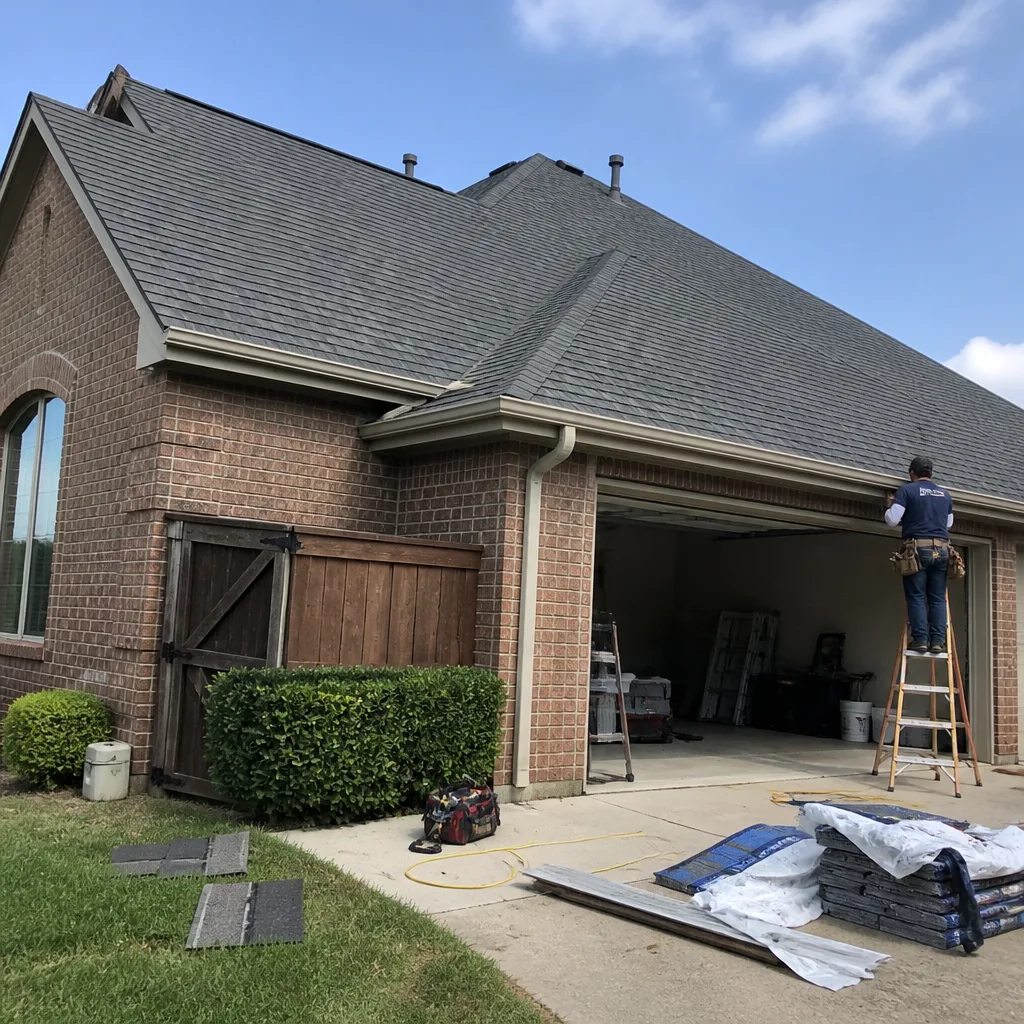 After
After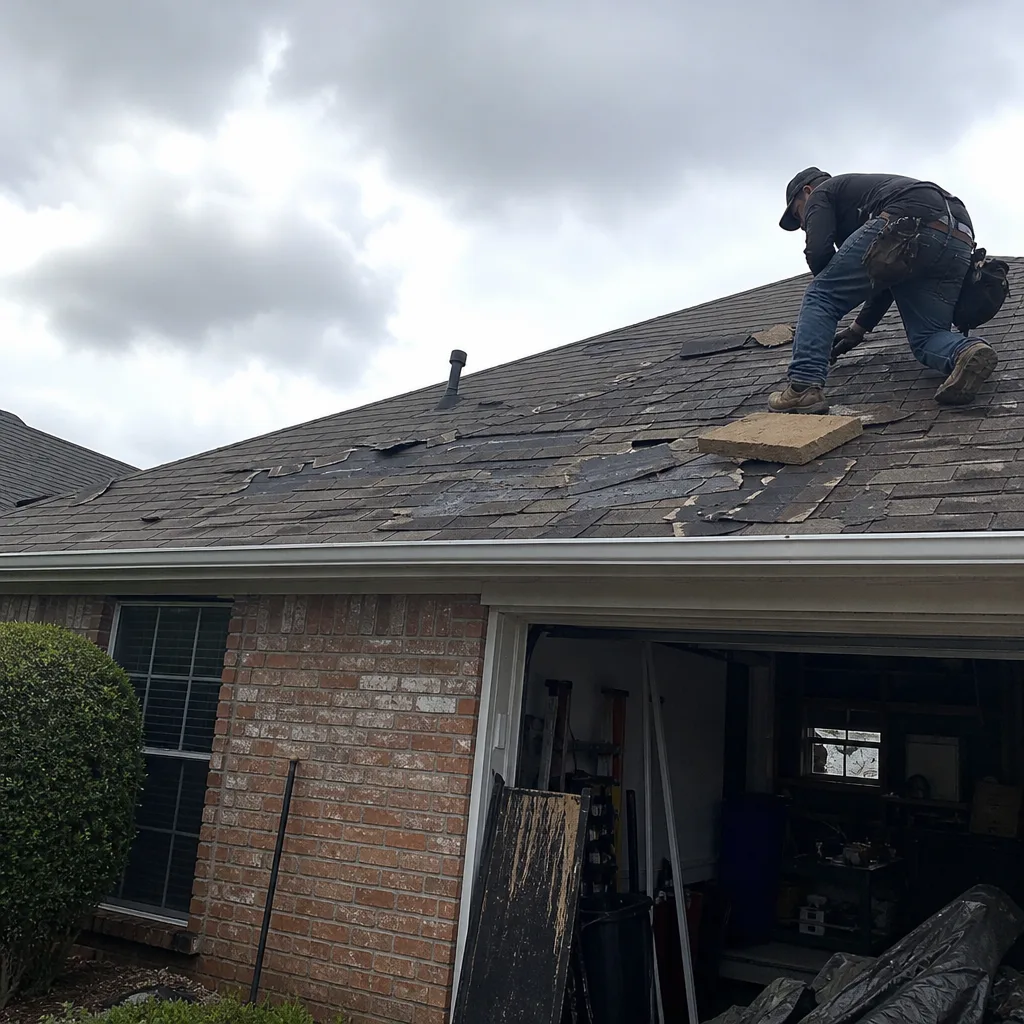 Before
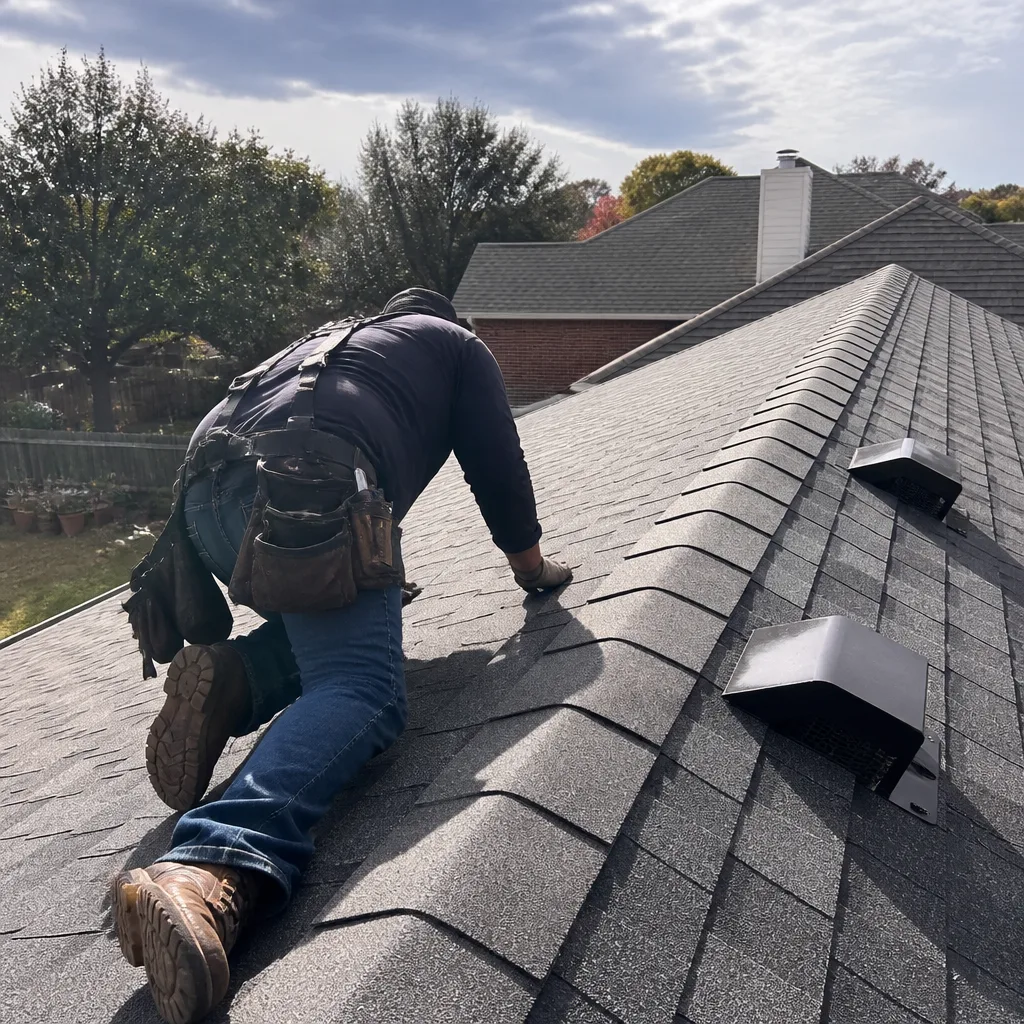 After
AfterDIY or Call Us?
Flashing replacement is one of those repairs where the gap between “looks doable” and “done correctly” is wide. What an owner can safely check: look for visible rust, cracked rubber boots, or pulled-away sealant from a ladder or from the ground with binoculars. You can also inspect the attic after a rain with a flashlight – water trails on the underside of the decking point toward the leak source. Those are useful diagnostics, and we’ll use your photos to help narrow things down on the phone.
What we don’t recommend any homeowner do is climb a steep Dallas roof with a tube of caulk or a replacement boot and try to peel back shingles. The roof-pitch on most North Texas homes plus the slickness of granule-coated shingles creates a real fall risk, and improperly lapped flashing is often worse than the original problem – the water gets in anyway, but now it’s hidden behind your work. If the flashing is in a valley or around a chimney, the fall danger and the risk of damaging the shingle seal both multiply. This is one repair where the labor cost protects you twice over: the roof stays watertight, and you stay on the ground. If you want to inspect from a ladder or send photos first, that’s a smart middle path. Call (432) 302-5605 and we’ll walk you through what you’re seeing.
FAQs
Plan on 10 – 15 years for standard galvanized flashing on a Tamko asphalt roof in DFW, with rubber pipe boots on the shorter end of that range due to UV exposure. Stone-coated steel or standing-seam flashing, like Tamko MetalWorks profiles, can last 25 – 40 years if installed with compatible components and not damaged by hail. Hail impacts accelerate everything – if your roof took a beating from a Dallas storm, have the flashing inspected even if the shingles look fine. Call (432) 302-5605 and we’ll put eyes on it.
Sometimes, but understand what a repair is: sealing a pinhole or re-adhering a lifted edge with proper roofing sealant. On a rusted, cracked, or severely separated flashing piece, sealant is a short-term pause, not a fix. We’ll tell you which one you have. If the flashing can safely get another few years with a quality repair, that’s the quote we’ll hand you – Grant Whitlock is known for telling homeowners what a roof actually needs versus what it doesn’t. Free estimates either way: (432) 302-5605.
A single pipe boot is about an hour. A one-side chimney flashing replacement is two to three hours. A full chimney re-flash or a long sidewall step-flashing replacement is a half-day job, and if we need to patch water-damaged decking underneath, that adds time but we’ll tell you before the job starts and the written quote reflects it. Most flashing replacements in Dallas are one-day projects, and we protect the work area and clean up before we leave.
We stock Tamko-compatible flashing profiles – pipe boots, step flashing, chimney saddles, valley metal, and kickout flashing – on our trucks for standard asphalt shingle systems in the common sizes. For Tamko MetalWorks-specific profiles, we order per job because the panel series templates vary. Either way, we’ll confirm the right match before the install date. Call (432) 302-5605 and tell us what you have; we’ll tell you if we can do it today.
Ready to Fix the Flashing Before the Next Storm?
If you have a Tamko roof in Dallas and you suspect flashing has failed, don’t wait for the next spring storm to confirm it. Call (432) 302-5605 and a live person answers – 24/7, not a voicemail. We’ll schedule a free estimate, and when our technician arrives, you’ll already know their name and have seen their photo, because that’s the Threshold Standard on every visit from Mercer Roofing Co Dallas. A roof shouldn’t be something you worry about. Let’s make sure yours isn’t.
Written by Grant Whitlock, Owner, Mercer Roofing Co Dallas at Mercer Roofing Co Dallas, serving Dallas and nearby areas.