
Last updated October 17, 2026
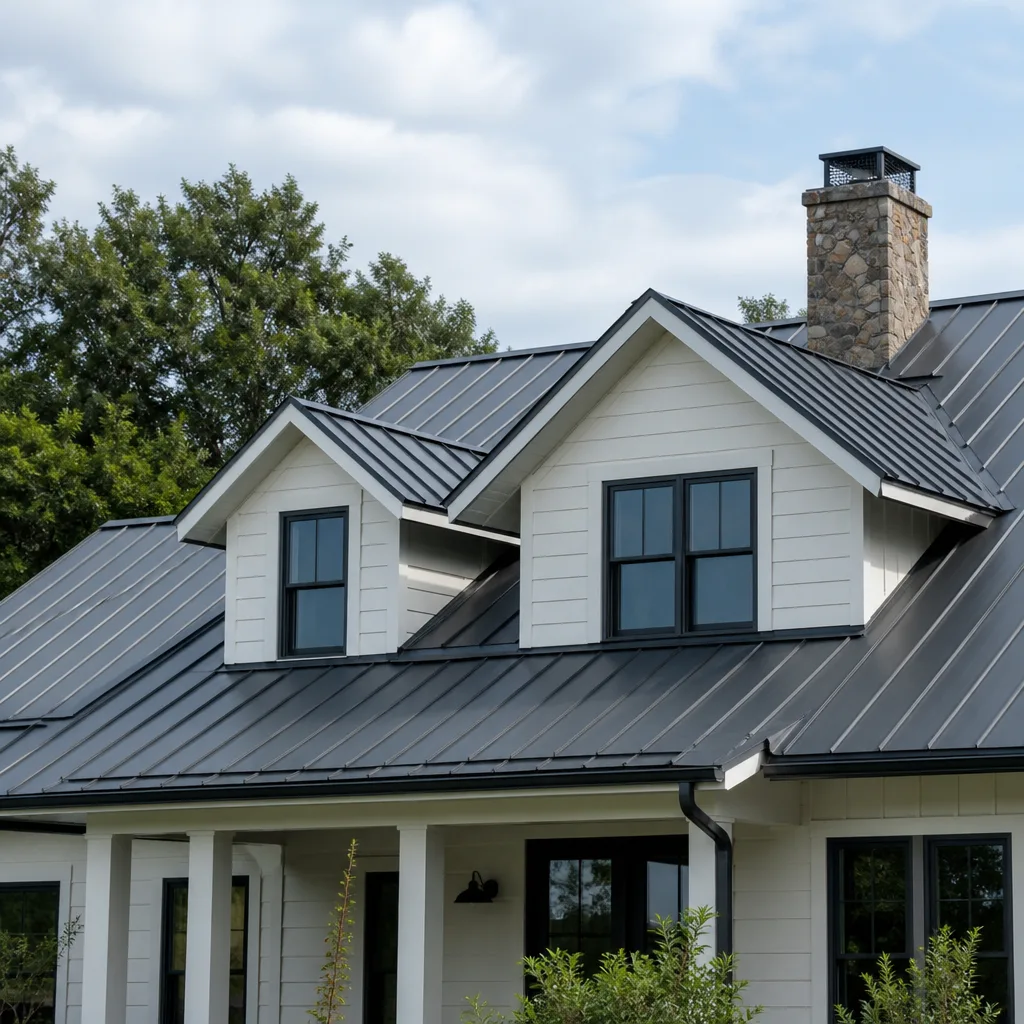 Metal roofing
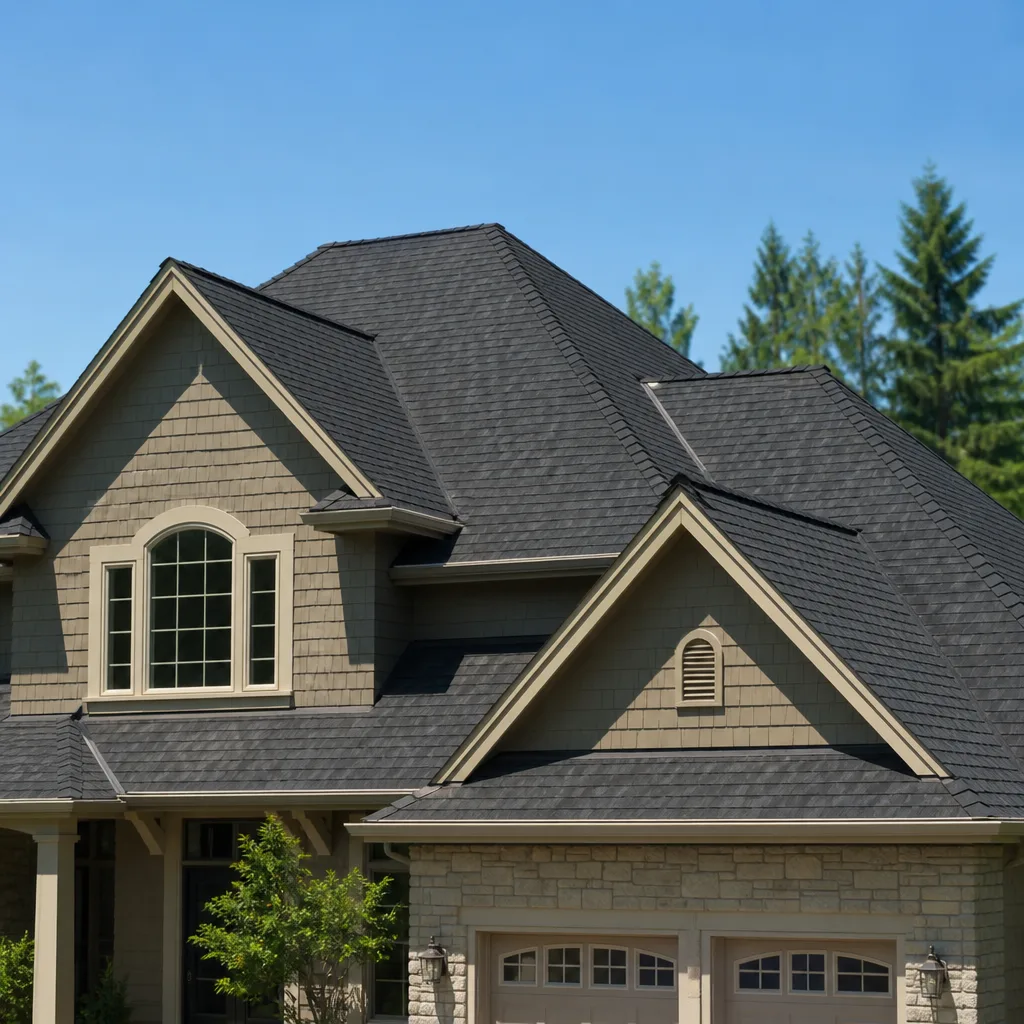 Architectural shingles
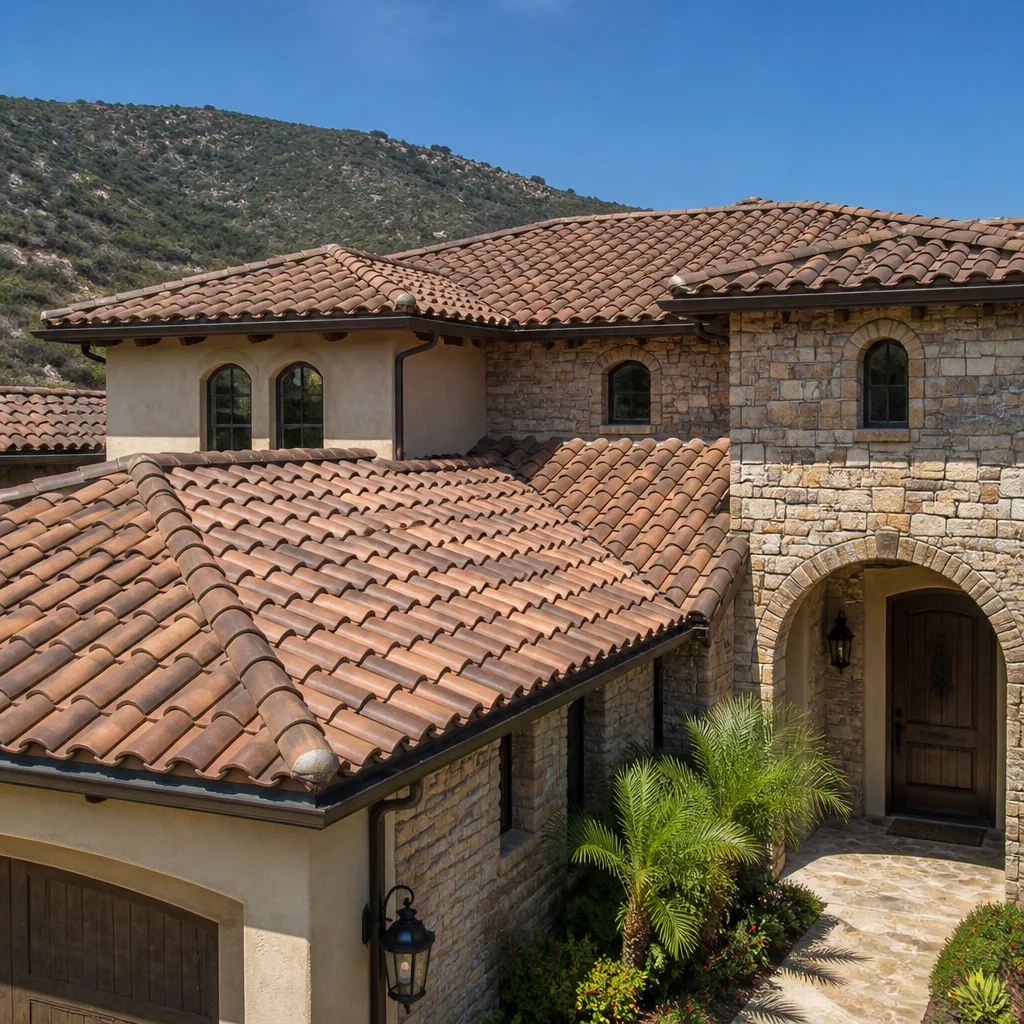 Tile roofing
 GAF
GAF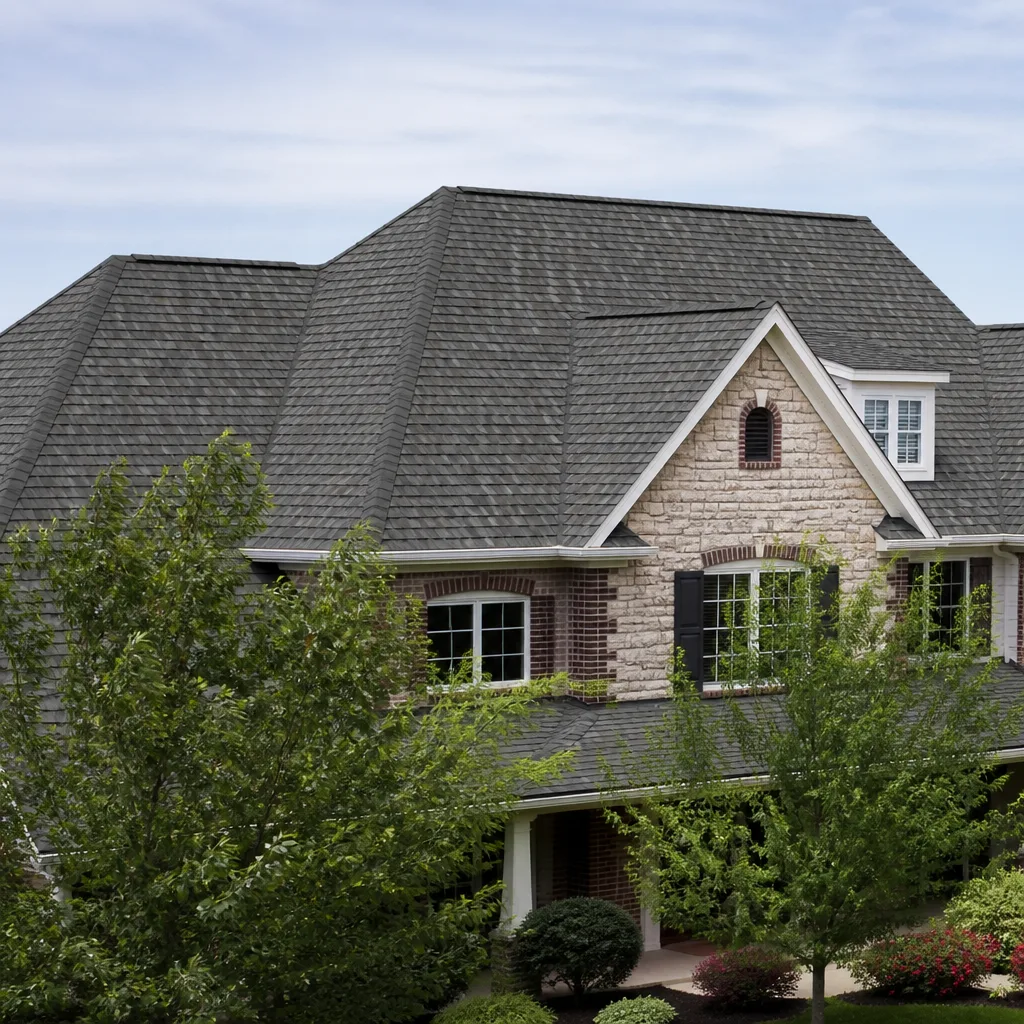 Owens Corning
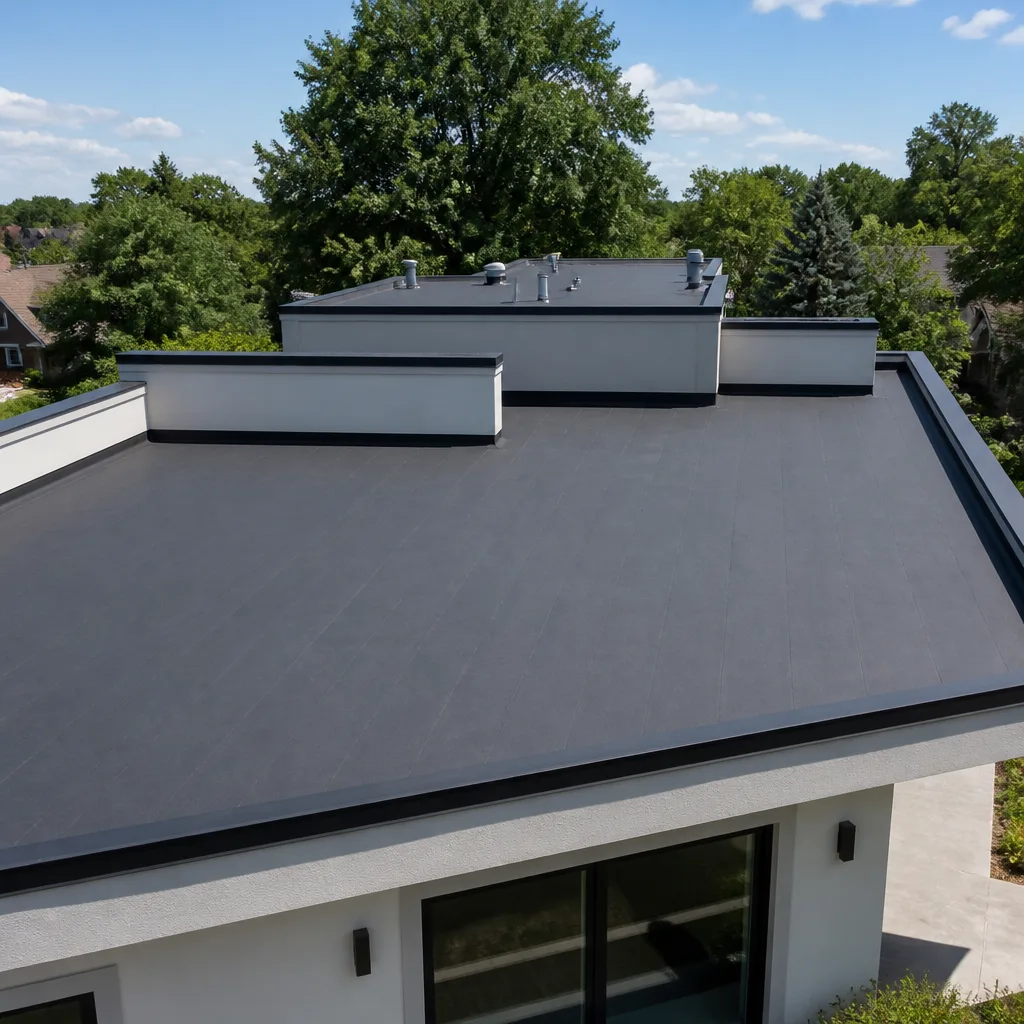 Flat & low-slope
Free roof inspection with deck photos before we talk money - GAF and Owens Corning certified installation
DIY vs Professional Roofing: The Dallas Homeowner’s Decision Guide
A Dallas homeowner who DIY-patches a roof boot seal correctly, but without a permit, can still face a denied water-damage claim two years later when the insurer traces the moisture intrusion to that exact repair zone. That single scenario captures the entire DIY-versus-professional debate in Dallas better than any list of tool requirements. This guide walks through the real decision framework: what’s genuinely safe to tackle yourself, where the line ends, what Texas insurers look for when a claim lands on their desk, and how to hire a professional in Dallas without inviting a stranger-at-the-door risk into your home. You’ll leave with specific dollar figures, permit realities, and a clear sense of when the “save money” math actually works in your favor.
Styles & brands we work with
Quick Answer
For cosmetic fixes like clearing leaves from gutters or replacing a single visible shingle in a low-slope dry area, DIY can work in Dallas. For anything involving flashing, decking, structural inspection, high-slope work, or post-hail repair, a licensed professional is the safer and financially smarter choice, largely because Texas homeowner’s insurance policies scrutinize repair history and documentation when claims are filed. The line between “do it yourself” and “hire it out” in Dallas is not about skill, it’s about liability, permits, and whether your insurer will cover problems that develop later. For a complete look at what to check before calling a contractor, see our Roof Repair Maintenance Checklist for Dallas Homeowners.
Table of Contents
- The Real Loaded Cost of DIY Roofing in Dallas
- Repairs That Are Genuinely Safe and Legal for Dallas Homeowners to DIY
- Dallas Permit Requirements and When They Apply
- Texas Insurance and the ‘Improper Repair’ Problem
- Why Post-Hail Repair Is the Worst Time to DIY in Dallas
- How to Verify a Dallas Roofing Contractor Before You Sign
- Common Mistakes to Avoid
- When to Call a Professional
- Frequently Asked Questions
- The Bottom Line
The Real Loaded Cost of DIY Roofing in Dallas
Most Dallas homeowners compare the retail price of a bundle of shingles against a contractor’s quote and stop there. That math misses most of what DIY actually costs. The loaded cost includes material retail markup, tool rental or purchase, disposal fees, fall-risk exposure, and the value of your own time, and in Dallas, it also includes the cost of correcting mistakes that would have been caught by a trained eye in the first hour.
Here’s what a small DIY repair actually looks like in Dallas, in real dollars:
- Three-tab shingle bundle (retail): $35 – $55 per bundle, and most Dallas big-box stores sell individual bundles at a 15 – 25% markup over contractor wholesale pricing.
- Roofing nail gun rental: $45 – $75 per day from Dallas tool rental counters. A hammer costs nothing, but it takes four times as long.
- Ladder rental or purchase: $40 – $60 per day for a 24-foot extension ladder, or $180 – $350 to buy one you’ll use twice.
- Flashing and sealant: $20 – $60 for a roll of aluminum flashing and a tube of polyurethane sealant, but only if you buy the right sealant the first time. Silicone sealant, which many DIYers grab because it’s familiar, degrades under Dallas UV exposure within 18 months.
- Disposal fees: $30 – $60 at a Dallas transfer station, plus the gas to haul old shingles across town.
- Fall protection gear: $80 – $150 for a harness and anchor if you’re doing this correctly on anything steeper than a 4:12 pitch.
Added together, a small repair that a Dallas contractor might quote at $250 – $450 can easily cost a DIYer $200 – $350 in materials, tools, and time, before counting the risk of doing it wrong. And that’s the part most guides skip: the risk of doing it wrong is not a hypothetical. Roof Repair in Dallas is built on correcting what Dallas weather does to roofs: thermal shock from 100-degree summers followed by sudden cold fronts, hail that cracks shingle backing without visible surface damage, and wind that lifts flashings over time.
The DIY math changes dramatically when the repair involves anything below the shingle surface. Once decking, underlayment, or flashing needs attention, the cost of a wrong guess exceeds the cost of having hired a professional in the first place. That’s not a slogan. It’s arithmetic based on Dallas material pricing and labor rates in 2025 and 2026.
Repairs That Are Genuinely Safe and Legal for Dallas Homeowners to DIY
Not every roof task requires a permit or a professional. Dallas allows homeowners to perform certain maintenance and cosmetic work on their own property without pulling permits, as long as the work does not involve structural components or the roof covering’s water-shedding integrity. The key distinction in Dallas code enforcement is whether the work alters the roof system’s function or just maintains its existing condition. Cosmetic maintenance is generally exempt. Functional repair is not.
Here are the specific tasks that fall on the safe, legal DIY side of the line for most Dallas homeowners:
- Gutter cleaning and debris removal: Clearing leaves, seed pods from Dallas live oaks, and granule buildup from your gutters and roof valley edges. This is maintenance, not construction. No permit applies. Use a ladder stabilizer and a second person on the ground. Low risk, high value, and the number one roof-preservation task in Dallas because clogged gutters in spring thunderstorm season are the most common cause of soffit water intrusion.
- Visual inspection from the ground or a ladder: Walking your roofline with binoculars or a phone camera after a Dallas hail storm to look for obvious shingle damage, lifted edges, or missing flashing pieces. This is documentation, not repair. What you’re doing is deciding whether to call a professional, and photos you take become useful claim documentation if you do file an insurance claim.
- Tree limb trimming that touches the roofline: Cutting back dead or overhanging branches that scrape shingles during Dallas wind events. This prevents granule loss and punctures. Wear eye protection and use a pole saw, not a chainsaw from a ladder.
- Replacing a single visible shingle on a low-slope, single-story section: This is the gray-zone task, and it is only safe and legal if three conditions are all met: the section is a 4:12 pitch or flatter, you can reach it from a ladder without leaning more than an arm’s length, and the shingle is in a dry, accessible location not tied into flashing, valleys, or vents. Even then, Dallas building codes treat this as maintenance only if it’s an occasional isolated repair, not a pattern of replacement. If you find yourself replacing more than three shingles, you’re now doing functional work that a permit official would consider a repair project.
- Applying a temporary tarp or roof patch after storm damage: Dallas weather does not wait for insurance adjusters. A tarp secured with furring strips and roofing screws is legal as an emergency measure, is explicitly allowed in Dallas as a temporary mitigation step, and is actually recommended before your adjuster arrives. This is different from a permanent repair. The tarp is meant to buy you 30 – 60 days, not to replace flashing or shingles.
The line ends the moment the repair touches any of these: flashing, decking, underlayment, valleys, vents, pipes, chimneys, or the roof-to-wall intersection. Those are functional components of the water-shedding system. In Dallas, roof covering work that impacts water-shedding performance falls under the city’s permit requirements, and doing it without a permit creates documentation problems that follow the house through a future sale and a future insurance claim. If a fastener penetrates the roof system below the shingle course, that’s where DIY ends and a Roofing Company in Dallas becomes the right call.
Dallas Permit Requirements and When They Apply
Dallas requires a building permit for roof work that involves the replacement of more than a cosmetic amount of roof covering, any changes to roofing structure, or any work that affects the roof’s drainage characteristics. The practical meaning for a homeowner is this: replacing a handful of shingles as an isolated repair may not trigger a permit, but replacing a roof plane or re-decking a section absolutely does. A contractor working without a permit in Dallas is exposing you to two risks: a code enforcement stop-work order, and an insurance carrier that uses the unpermitted work as grounds to contest a later claim. Unpermitted work does not automatically void coverage, but Texas insurers are increasingly citing it in claim denial letters as evidence of improper repair that contributed to damage.
Here’s what a permitted Dallas roof project actually involves, step by step:
- Contractor verifies scope. A proper Dallas roofing contractor assesses whether the work triggers permit requirements before writing the estimate. Repairs that stay within one or two shingle courses often don’t. Full roof replacements always do.
- Permit application filed. Dallas permit applications for roof work include a scope-of-work description, property address, contractor’s Texas registration number, and the calculated roof square footage. The permit fee in Dallas for a typical residential roof replacement typically falls in the $150 – $400 range, depending on total valuation.
- Permit approved and posted. Once approved, the permit number must be available on site during work. A legitimate contractor will show it to you without being asked.
- Inspections scheduled. Dallas requires an inspection at the decking/underlayment stage and a final inspection once the roof covering is complete. This is the step that catches problems before the next rainstorm does.
- Final inspection passes. The permit is closed out. You keep the documentation. If you ever file an insurance claim on that roof area, the permit record and inspection history are part of what proves the work was done correctly.
That documentation trail is the part of the permit conversation most Dallas homeowners never hear. A permit is not just paperwork. It’s the evidence that a licensed professional did the work to a verifiable standard. If a future claim involves water intrusion, the insurance adjuster will ask who did the work, when, and whether a permit existed. If the answer is “I did it myself, no permit,” you have just handed the carrier a written reason to contest the claim. That’s not an exaggeration. It’s the stated reason on a growing number of Dallas-area claim denial letters.
Texas Insurance and the ‘Improper Repair’ Problem
Texas homeowner’s insurance policies contain language that excludes coverage for damage caused by faulty, inadequate, or defective workmanship, repair, or maintenance. That clause, buried in most HO-3 policies under Section I – Exclusions, is the reason the DIY-versus-professional decision in Dallas is more about documentation than about craftsmanship. If a water-damage claim is traced back to a prior repair, the carrier will ask who performed that repair and what evidence exists that it was done correctly. A contractor’s written warranty, a permit record, and an inspection report are evidence. A YouTube tutorial watched three years ago is not.
Here’s the specific sequence that plays out in Dallas more often than you’d think:
- Homeowner notices a small leak around a roof boot in 2023. They replace the boot themselves with a $15 part from a Dallas home center. It stops leaking. They never document the repair.
- In 2025, a spring storm with 60 mph winds lifts a section of shingles near the same roof penetration. Water enters the attic, soaks the insulation, and stains the ceiling below.
- Homeowner files a claim. The adjuster climbs the roof, notes the non-standard boot installation, photographs it, and writes in the report that the repair zone shows evidence of improper prior work.
- The carrier issues a partial denial, covering storm damage to the lifted shingle section but denying the interior water damage connected to the boot area, citing the improper repair exclusion.
That scenario is not invented. It’s the documented pattern from Texas Department of Insurance complaint files and Dallas-area public adjuster testimony. The DIY repair itself may have been executed correctly. The problem is that the homeowner cannot prove it. A professional repair comes with a written guarantee, a work order describing the repair, the technician’s name, and a paper trail that answers the adjuster’s question: who did this work, and was it done right? Without that paper trail, the burden of proof sits with the homeowner, and the burden is heavy.
This is also where the brand of materials matters more than most guides acknowledge. Insurers and Dallas adjusters are most comfortable with repair work that matches surrounding roof systems and uses manufacturer-recognized materials. GAF, CertainTeed, and Owens Corning all publish installation specifications that a professional contractor follows. A DIYer using whatever shingle the local big-box store had on sale creates a visual patchwork that adjusters are trained to flag during post-storm inspections. The shingle itself may be perfectly functional. But in a claim context, the adjuster’s job is to spot non-standard repair patterns, and a mismatched patch is exactly that.
Why Post-Hail Repair Is the Worst Time to DIY in Dallas
Dallas sits in the middle of North Texas hail alley. Hail storms in Dallas County produce everything from dime-sized pellets that knock granules loose to golf-ball-sized impacts that bruise shingles at the mat level, creating weak spots that fail months or years later. The window after a Dallas hail event is when DIY temptation peaks and when DIY mistakes cost the most. There are three specific reasons why post-hail repair is the worst possible time to grab a ladder.
First, hail damage is mostly invisible to an untrained eye. Hail fractures the fiberglass mat inside an asphalt shingle without always breaking the surface. The visible signs, small dark spots or granule loss at impact points, are subtle. A homeowner sees a few cracked shingles and replaces them. The actual damage, bruised mats across the entire roof plane, goes unaddressed. Six months later, the first hard rain finds the weak spots, and the leak appears nowhere near the visible damage from the storm. By then, the insurance window for storm-related damage has narrowed and the causal chain is harder to prove.
Second, insurance adjusters are trained to flag non-standard repair patterns. After a major Dallas hail event, carriers dispatch adjusters who have handled hundreds of storm claims. They know what professional hail repair looks like: consistent shingle brands, consistent installation patterns, clear evidence that damaged sections were systematically identified and replaced. A DIY patch job stands out immediately. One mismatched Coursetone shingle among a field of architectural shingles, a nail pattern that doesn’t match the surrounding rows, sealant smeared around a vent boot. Each of those flags gets photographed and recorded in the claim file. The claim isn’t automatically denied, but the adjuster’s report now contains evidence of non-standard work that can be used to contest coverage of later water damage.
Third, the claim process itself requires documentation you won’t have. A post-hail roof replacement in Dallas typically flows like this: storm hits, homeowner files a claim, adjuster inspects and writes a scope of loss, contractor performs the work to that scope, homeowner gets a final invoice and a warranty. Each step generates paperwork. A DIY repair generates none of it. If a subsequent problem develops in the repaired area, the absence of documentation means the homeowner is negotiating from weakness. For any Dallas homeowner who has experienced hail, the smart move is to call a Roof Installation in Dallas professional who understands the claim cycle, documents everything, and installs materials that adjusters recognize on sight.
How to Verify a Dallas Roofing Contractor Before You Sign
The “hire a professional” choice is only safer if the professional you hire is actually safe. Dallas has hundreds of roofing contractors, and the barrier to entry is low. Texas does not license roofing contractors at the state level, which means the burden of verification falls entirely on you. A magnet on the side of a pickup truck is not a credential. Here’s what to ask and what to look for, in Dallas specifically.
Here is a numbered verification checklist, in order:
- Ask for proof of insurance, not just a verbal yes. A legitimate Dallas roofing contractor carries general liability insurance and workers’ compensation coverage, and can produce a certificate of insurance with you named as an additional insured. If the contractor hesitates at that request, end the conversation. No exceptions. In Dallas, if an uninsured worker falls off your roof, the medical and liability costs can land on your homeowner’s policy.
- Verify identity before the technician arrives. This is the part of hiring a roofer that most guides gloss over, but in Dallas, where door-to-door roofing crews appear after every storm, it matters more than price. Know who is coming to your door before they knock. A company that sends the technician’s name and photo ahead of the visit, and that tech arrives in a marked uniform with a photo ID badge, is operating differently from the stranger-with-a-clipboard model that creates real risk for homeowners who are alone or caring for young children or aging parents.
- Require a written price before work begins. Not an estimate range. Not a verbal ballpark. A written line-item price. In Dallas, a professional roofing contractor writes the price down, walks you through it, and doesn’t start until you sign off. A contractor who won’t put the price in writing before driving the first nail is planning to change the price after the work starts. That is not acceptable, and you should say so plainly.
- Ask what the written guarantee covers and for how long. The specific words matter. “We stand behind our work” is not a guarantee. “365 days, if the repair fails within a year, we come back and make it right at no charge, and that promise is written on the invoice” is a guarantee. Get the duration and the scope in writing. A written guarantee that includes a free second visit if the repair fails is the minimum reasonable standard for Dallas roof repair work.
- Confirm who answers the phone. Call the number on the company’s website. Not during business hours to schedule an estimate. Call at 9:30 p.m. on a Tuesday. If a live person answers, you’ve learned something real about how the company treats its customers. If you get a voicemail tree and a promise of a call-back within one business day, you’ve learned something else. After a Dallas hail storm, you will need a human being on the phone, not a form submission.
- Check that the contractor is familiar with your shingle brand. A Dallas roofer who regularly installs GAF, CertainTeed, and Owens Corning products knows the manufacturer’s installation specs and can maintain existing warranties. A roofer who says “whatever brand you want, they’re all the same” is signaling that manufacturer installation standards are optional for them. They are not.
We’re Mercer Roofing Co Dallas home, and we built our process around these standards because we’ve seen what happens when Dallas homeowners don’t have them. Our technicians are background-checked and identity-verified under the Threshold Standard, their names and photos are sent to you before every visit, they arrive in clean marked uniforms with photo ID badges at the door, and every job comes with a written price and a written 365-Day Done Right Promise. That is what a safer hire looks like in Dallas, and it’s the standard we hold ourselves to on every job.
Common Mistakes to Avoid
Every roofing contractor in Dallas has seen the same DIY mistakes repeated across every neighborhood from Lakewood to Preston Hollow to North Oak Cliff. These are the specific errors that turn a $40 Saturday project into a $4,000 water-damage claim. Avoid these, and you avoid most of what goes wrong with DIY roofing.
- Using silicone sealant instead of polyurethane or butyl on roof penetrations. Silicone is what most people have in the garage. It fails under Dallas UV exposure and thermal cycling within 18 months. Polyurethane sealant and butyl tape are the materials that survive Texas summers. Using the wrong sealant is the single most common DIY roof failure we see in Dallas.
- Nailing through the shingle instead of the nail line. Asphalt shingles have a designated nail strip, a reinforced band where fasteners are supposed to go. Nailing above or below that strip means the nail is not fully covered by the shingle above it, which creates a leak path and voids the manufacturer’s wind warranty. This mistake is invisible from the ground and fails the first time a Dallas storm drives rain sideways.
- Replacing shingles without checking the decking underneath. What looks like a single damaged shingle is often a symptom of wet decking underneath, and the decking problem is the actual issue. Slapping a new shingle over rotted OSB holds nothing. The nail pulls out in the first wind event, and the leak persists. A professional checks the decking with a moisture meter and replaces what’s soft before the shingle goes down.
- Assuming a permit is not required because the repair is small. In Dallas, the permit trigger is about what the work affects, not just its size. A small repair that touches flashing or changes drainage characteristics can require a permit. A large replacement done by a contractor who “handles the permit,” but never actually files it, leaves you holding the exposure. Ask for the permit number.
- Climbing onto a Dallas roof in July or August without understanding the surface temperature. Asphalt shingles in Dallas sun reach 140 – 160°F by midday. That heat softens shingles, making them easy to tear even with careful foot placement. Walk a Dallas roof at 2 p.m. in August and you can damage more shingles than you came to repair, plus risk heat exhaustion in the process. Professionals schedule work for early morning in Dallas summer months for exactly this reason.
- Not documenting the before, during, and after of a DIY repair. If you do choose to DIY a minor task, photograph every step: the damage before, the materials used, the work in progress, and the finished result with a date stamp. These photos are your only evidence if a future claim involves that area. Most DIYers take zero photos and then have no answer when an adjuster asks what was done and when.
- Trusting a door-knocker after a Dallas storm. The storm chaser model works because hail creates urgency, and urgency short-circuits verification. A person appears at your door claiming they can repair your roof this week. No written price, no verifiable credentials, no real company behind them. The right response in Dallas is to close the door and call a roofing company you’ve already researched. Door-to-door roofing solicitation is not automatically a scam, but the burden of verification is entirely yours, and the risks of getting it wrong are not worth the convenience.
When to Call a Professional
Call a professional when the repair involves any of the following: flashing, decking, underlayment, valleys, roof penetrations, or anything on a roof section steeper than a 4:12 pitch. Call when the damage follows a Dallas hail or wind event, because insurance documentation is now part of the job. Call when you cannot identify the source of a leak from the interior, because water travels and guessing wrong means cutting into the wrong ceiling. Call when you’re not comfortable on a ladder or roof surface, which is not a statement of weakness but a statement of judgment. Call when you need an answer from someone who can verify the problem, fix it correctly, and hand you a written guarantee. Mercer Roofing Co Dallas offers free estimates across the Dallas area. Call (432) 302-5605 to schedule yours, and you’ll get a written price before any work begins.
Frequently Asked Questions
Most roof repairs in Dallas run between $250 and $850, with the most common repairs, including pipe boot replacement, small flashing fixes, and isolated shingle replacements, landing in the $300 – $500 range before permits. Larger repairs involving multiple flashing points, decking replacement, or valley work typically run $800 – $2,500. The wide range reflects access difficulty, roof slope, and the extent of hidden decking damage, not just the visible surface issue. For an exact price on your specific repair, call (432) 302-5605. Estimates are free, and the written price is provided before any work starts.
For cosmetic maintenance like gutter clearing and isolated shingle replacement that doesn’t involve flashing or structural components, no. For any work that affects the roof’s water-shedding function, including flashing, decking, valleys, or drainage changes, yes, Dallas requires a permit. If you’re unsure which category your project falls into, call the City of Dallas Development Services Department or ask a licensed contractor to assess the scope before you start.
Never attempt DIY work on flashing, decking, underlayment, valleys, roof penetrations, or any roof section steeper than a 4:12 pitch. These components form the roof’s water-shedding system, and mistakes in any of them create leak paths that may not show up for months. In Dallas, where thermal cycling and hail stress roofs harder than in most U.S. markets, the cost of a wrong guess on flashing or decking exceeds the cost of a professional repair nearly every time.
Maybe not, and the risk is higher than most homeowners assume. Texas homeowner’s policies exclude coverage for damage caused by faulty or improper repair, and an insurer tracing later water damage to a prior DIY repair can deny the portion of the claim connected to that work. The key variable is documentation: professionals provide written work orders, warranties, permit records, and inspection reports. A DIY repair provides none of that, which shifts the burden of proof onto you in a claim dispute.
Most Dallas roof repairs are completed in one visit, usually two to five hours depending on scope and access. Larger repairs that involve decking replacement or multiple flashing points can run a full day. The variables are weather, roof pitch, and whether a permit inspection is required, which adds a day or two to the overall timeline in Dallas. A written estimate will state the expected timeline before work begins.
Ask for proof of general liability and workers’ compensation insurance with you named as an additional insured. Ask whether the technician’s name and photo will be sent to you before the visit. Ask for a written price before work starts. Ask what the written guarantee covers and for how long. Ask who answers the phone after hours. Ask for the permit number once the project is permitted. A contractor who answers all of these questions clearly is operating at a standard most Dallas roofers don’t meet, and that standard is exactly what protects you. Call (432) 302-5605 to speak with a live person and get your questions answered directly.
The Bottom Line
The DIY-versus-professional decision in Dallas is not about whether you’re capable. It’s about what the work touches and whether you can document it. Cosmetic maintenance on low-slope, accessible, single-story sections can be done safely by a careful homeowner. Everything else, which is most real repair work, belongs with a professional who carries insurance, pulls permits, writes down the price, and gives you a written guarantee. In a Dallas climate that punishes roofs with hail, heat, and wind, the most expensive repair is the one done twice. The second-most expensive is the one done without documentation. The smartest move is a written estimate from a contractor you’ve verified. For a free estimate in Dallas, call (432) 302-5605 and know exactly who’s coming to your door before they arrive.
Written by Grant Whitlock, Owner at Mercer Roofing Co Dallas, serving Dallas since 2000.
See the difference
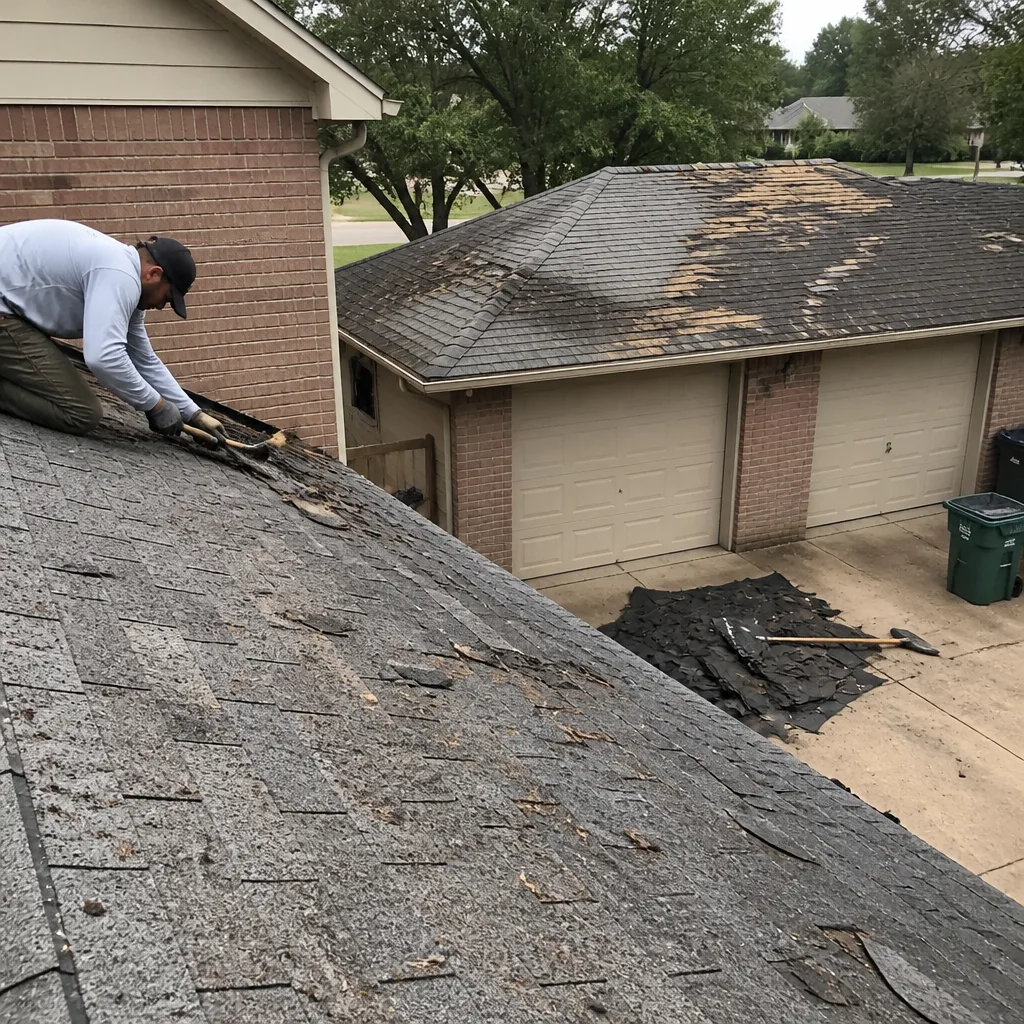 Before
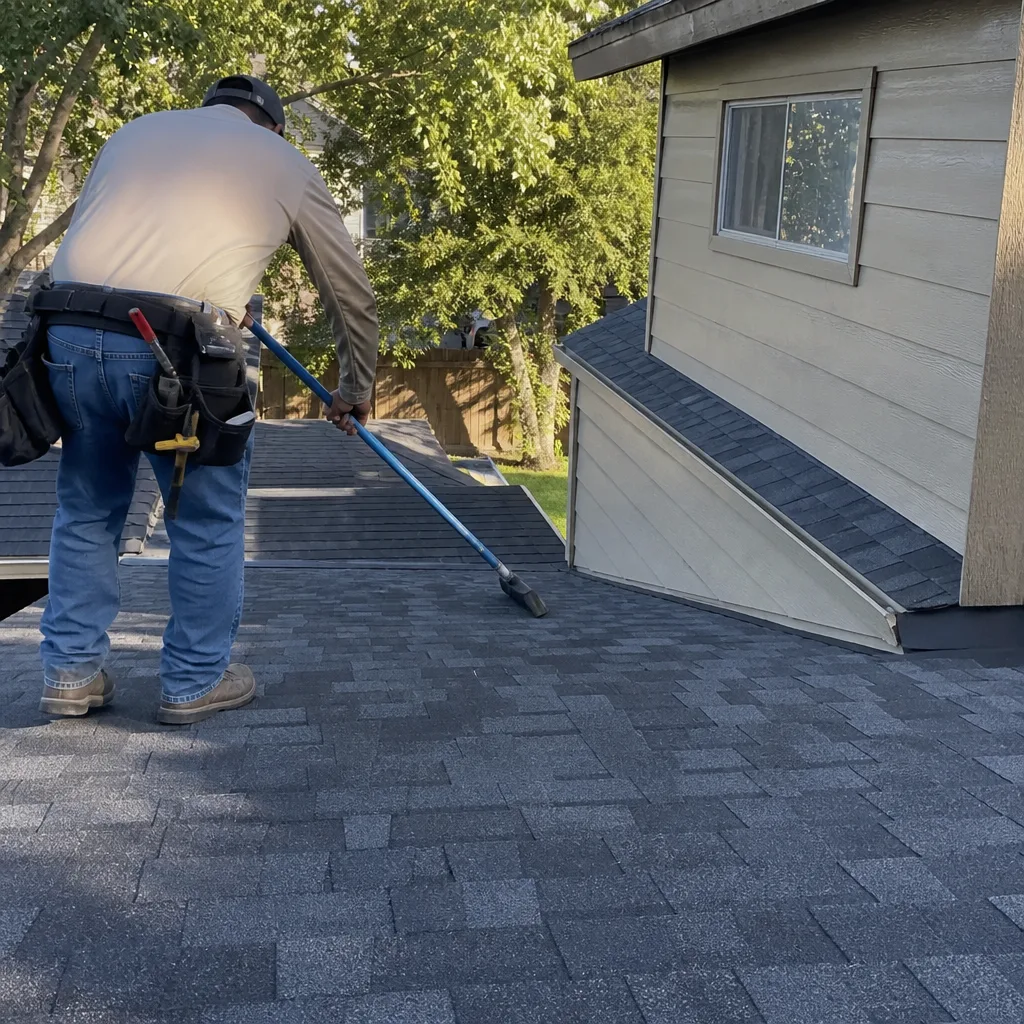 After
After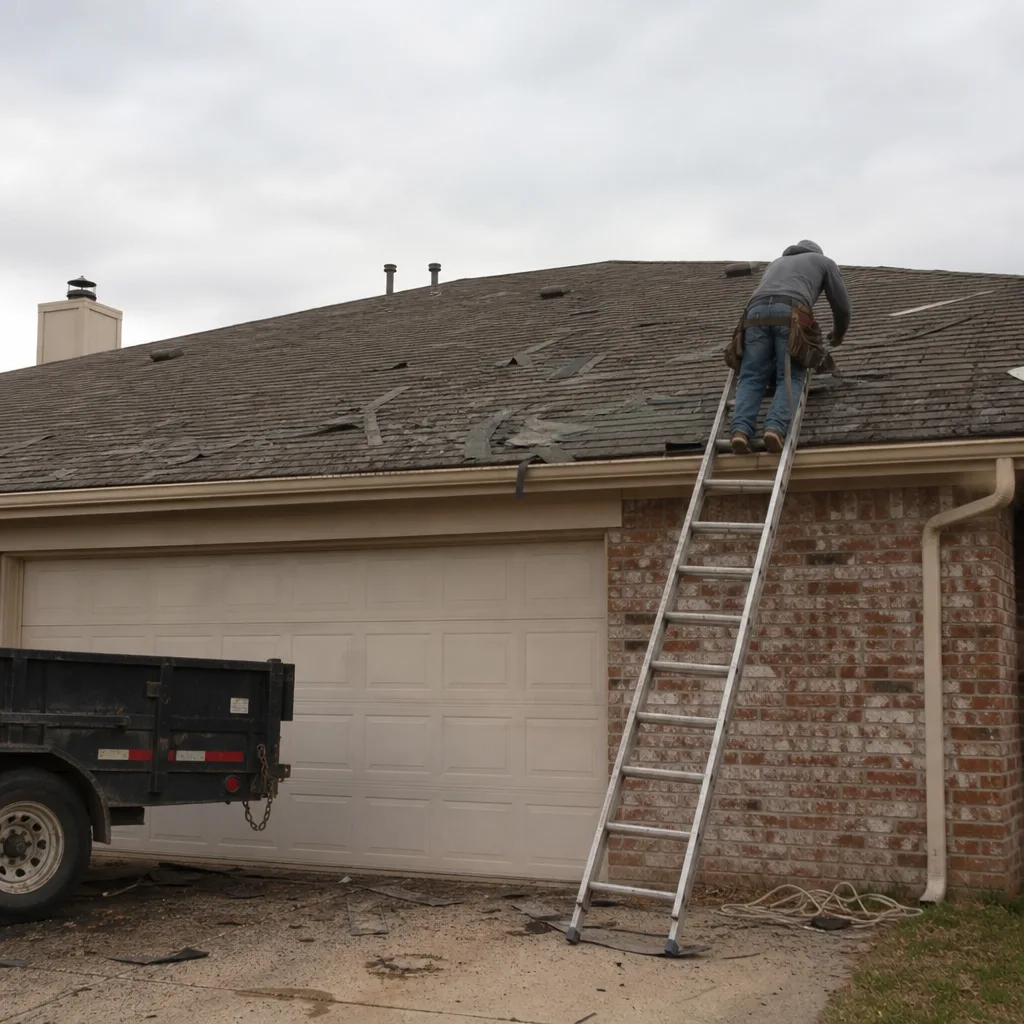 Before
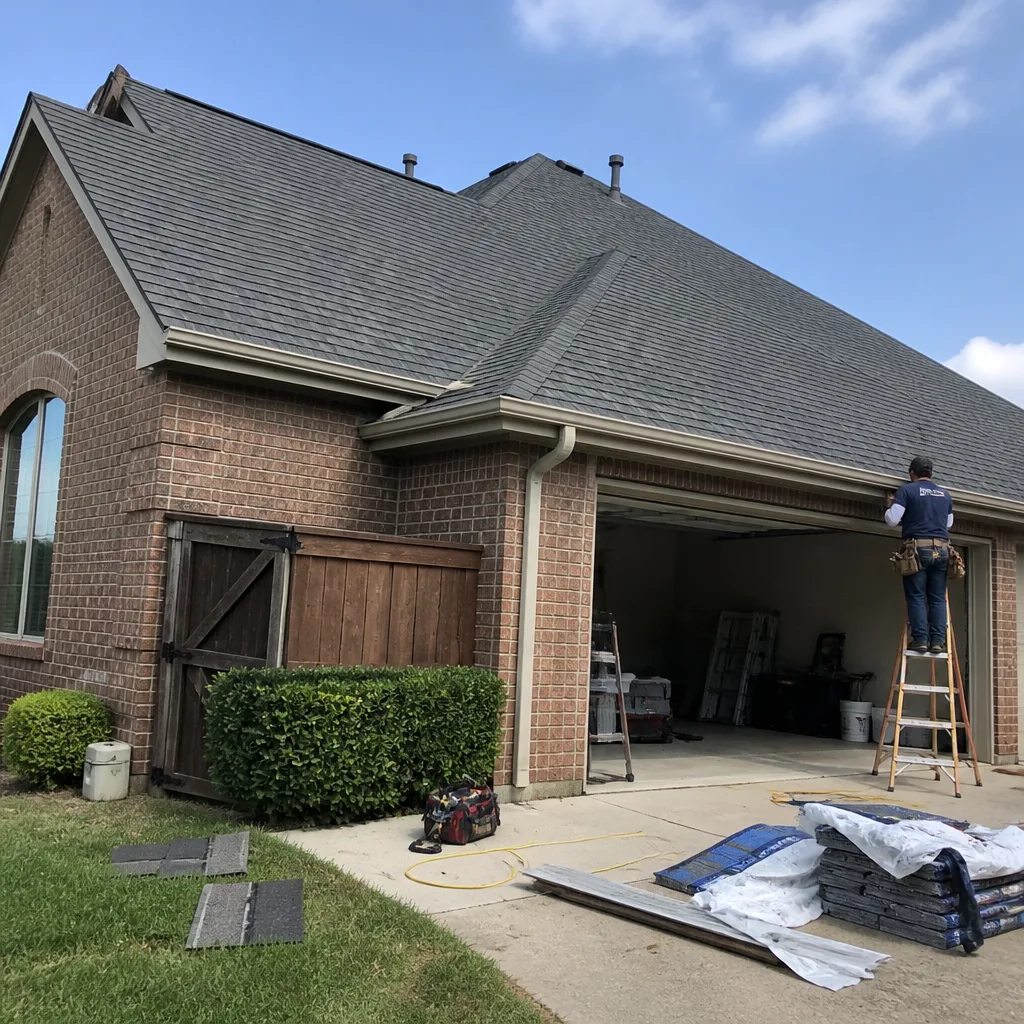 After
After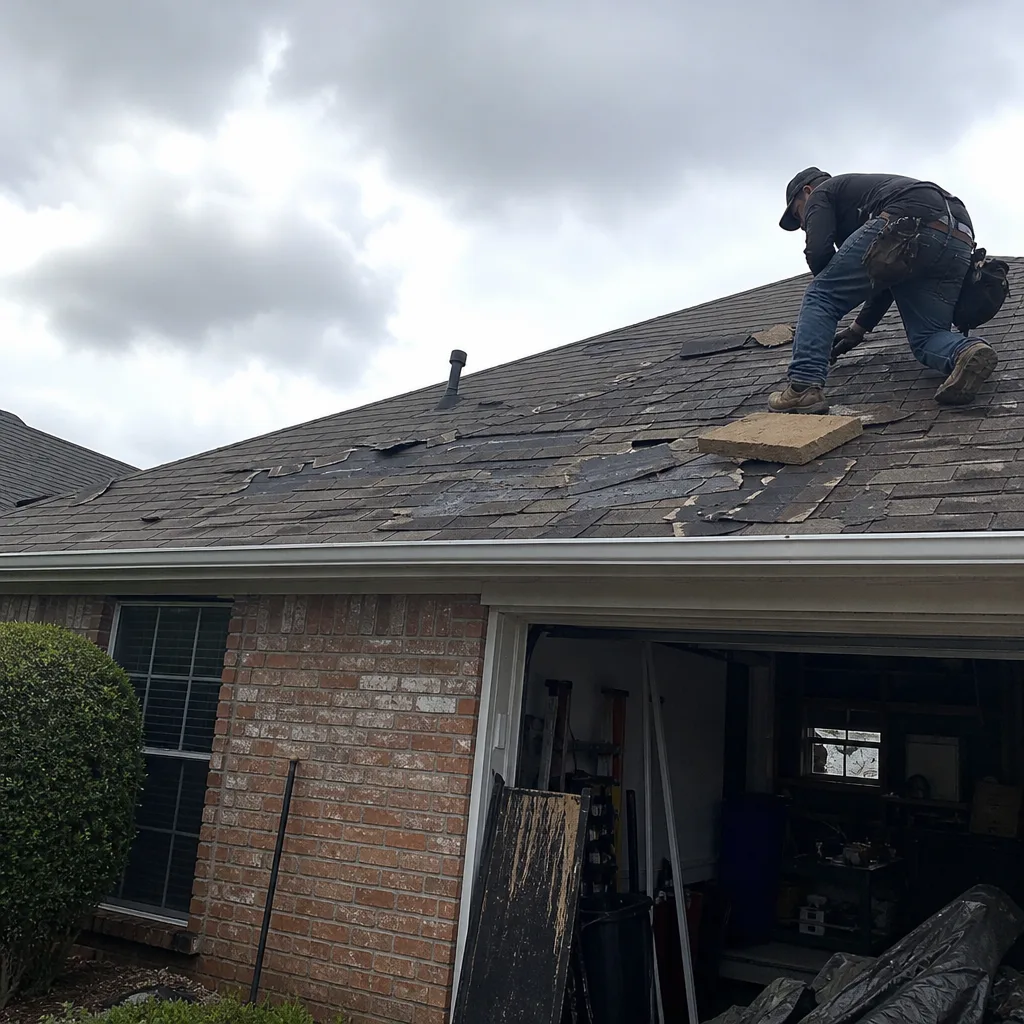 Before
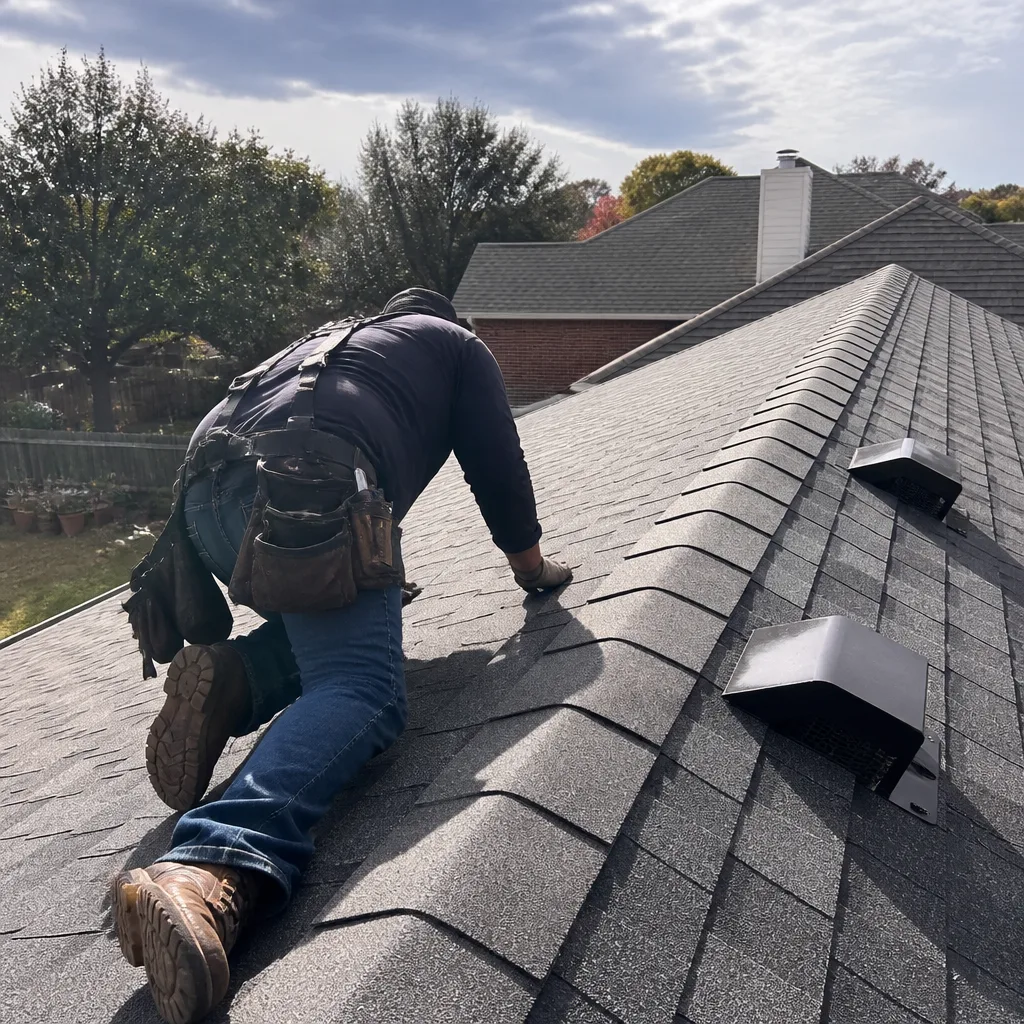 After
After