
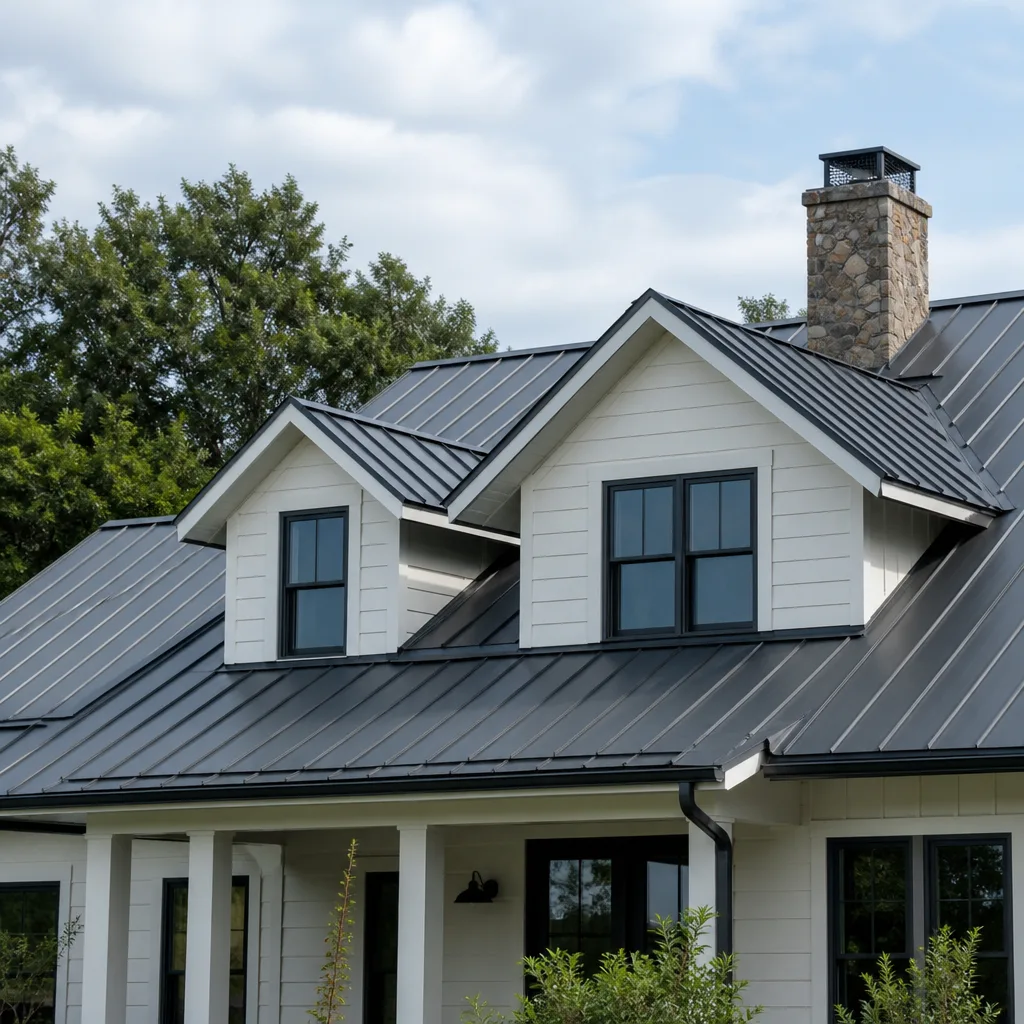
 Metal roofing
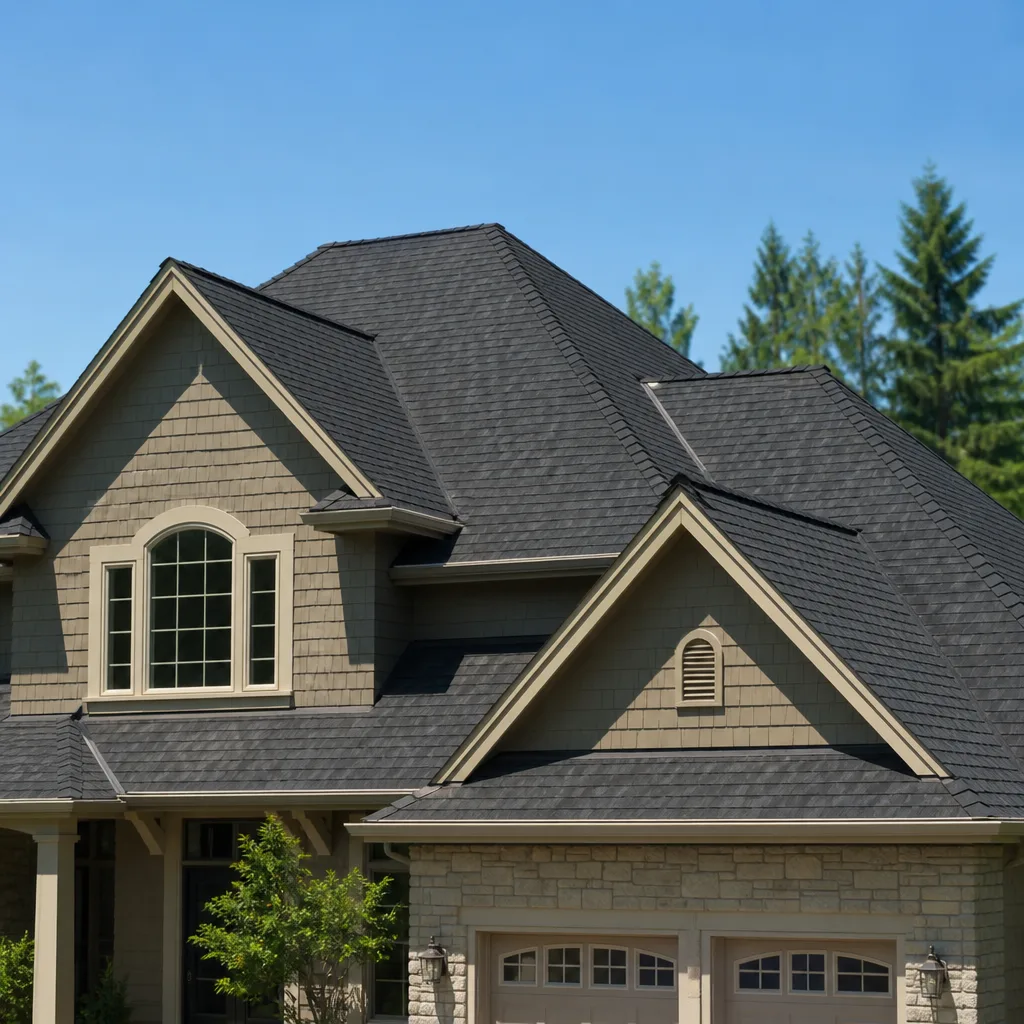 Architectural shingles
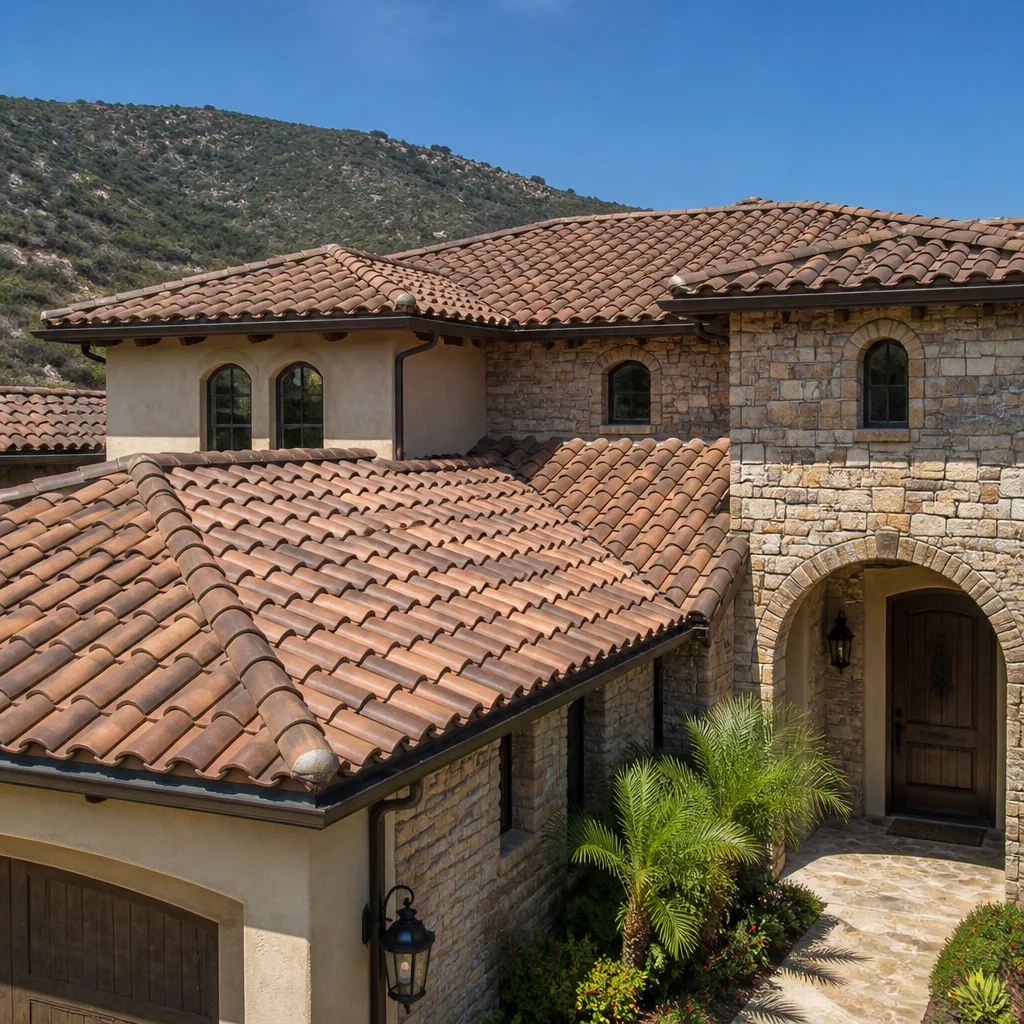 Tile roofing
 GAF
GAF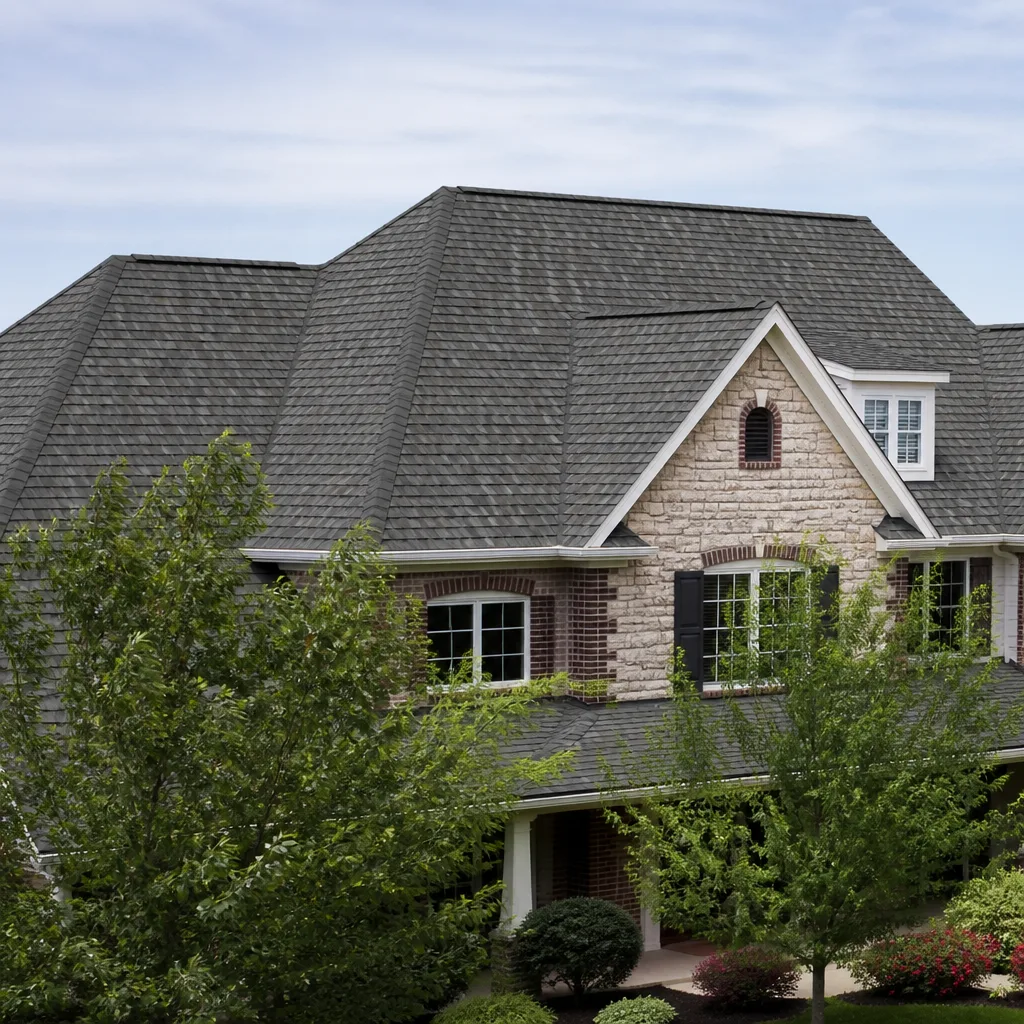 Owens Corning
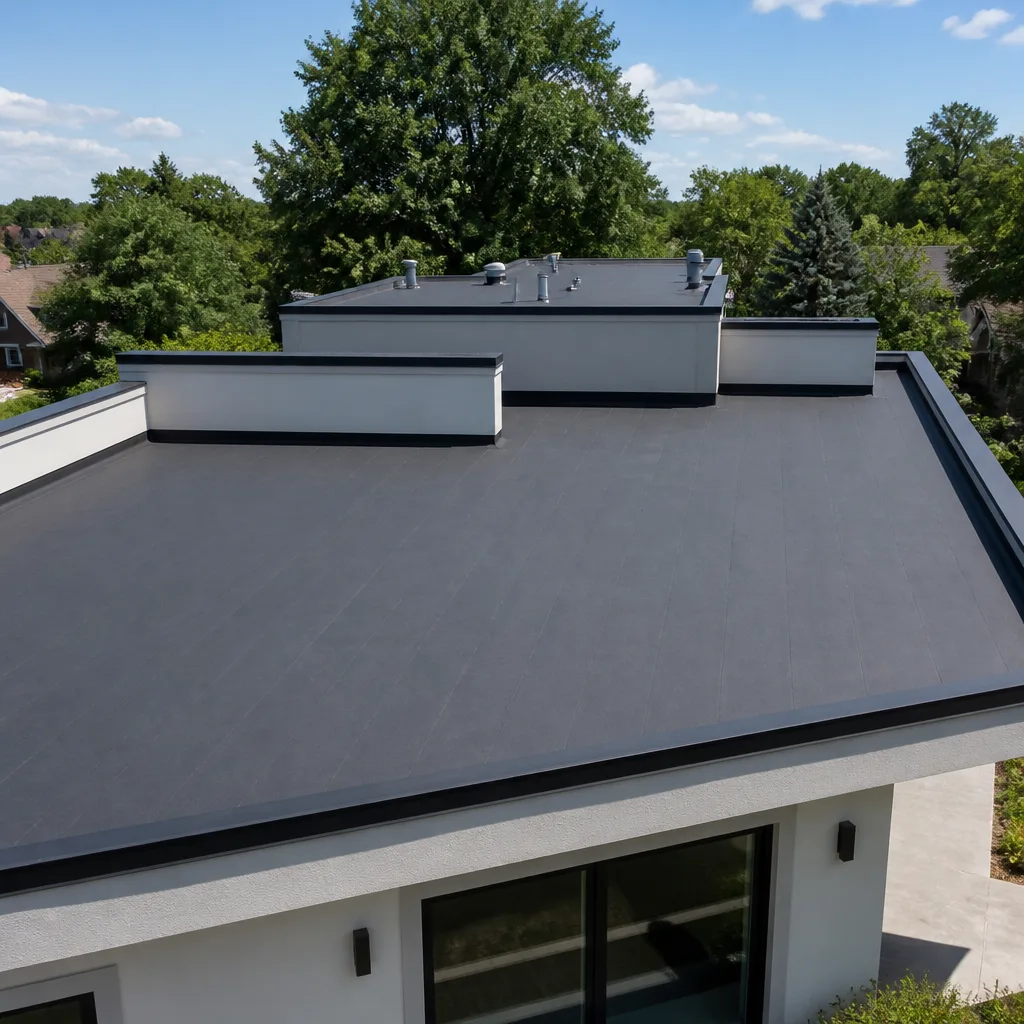 Flat & low-slope
Free roof inspection with deck photos before we talk money - GAF and Owens Corning certified installation
CertainTeed Ridge Vent Installation: The Dallas Owner’s Guide
We stock and install CertainTeed-compatible ridge vents across Dallas, with most installations running $385 to $675 fully installed depending on ridge length and roof pitch. Most Dallas homeowners find out their ridge vent has failed the hard way: a hot upstairs in July, a stain on the ceiling after a spring storm, or shingles that look lifted along the peak. The ridge vent is the exhaust half of your attic’s breathing system, and when it stops working or was installed wrong from day one, the whole attic goes stagnant. In a Dallas summer, a stagnant attic can hit 140 degrees. That heat pushes down through your insulation, drives your AC bill up, and cooks your shingles from underneath so they wear out years early. We’re going to walk through exactly what goes wrong, what it costs to fix, and how to know if yours is actually failing, not just old.
Which CertainTeed Models This Applies To
The two CertainTeed ridge vents we install most in Dallas are the ShingleVent II and the PeakBooster II. ShingleVent II is the workhorse: a flexible, mesh-reinforced rolled vent that sits under cap shingles and works on asphalt shingle roofs. PeakBooster II is the upgrade for roofs that need more airflow than a standard ridge can deliver, often used on low-slope roofs or homes where the attic has been converted to living space and the classic soffit-to-ridge path has been interrupted. One compatibility gotcha Dallas homeowners run into: CertainTeed’s roll ridge vents are sized for specific roof pitches and shingle exposure, and if your roofer trims the vent roll too wide for the ridge slot, you’ll get what’s called “wind-driven rain intrusion” in the trade. That’s a polite way of saying water gets in during a June squall. We measure the slot width and match the vent roll before anything gets nailed down. On the OEM-versus-aftermarket question: for CertainTeed roofs, we install the CertainTeed product almost every time. The manufacturer’s warranty math works better when the whole roof system is their product, and the cost difference is small enough that chasing an off-brand equivalent rarely makes sense.
Styles & brands we work with
Signs Your CertainTeed Ridge Vent Installation Is Failing
- Upstairs rooms that won’t hold a temperature. This is the most common Dallas complaint we hear. The ridge vent is clogged, crushed, or was installed with too narrow a slot, so the attic isn’t exhausting. Heat builds up all day and migrates into the upper floor by late afternoon.
- Water stains on ceiling corners or along bedroom walls near the ceiling. Wind-driven rain pushes under the cap shingles when a ridge vent is aging, torn loose at the ends, or installed without the proper end caps and weather filter. Dallas gets plenty of sideways rain in April. A properly installed vent rolls that water to its weather-filter layer instead of your sheetrock.
- You can see the vent material poking out or sagging at the ridge line from the street. UV exposure and Texas heat degrade the vent’s edge over time, and the cap shingles start to lift. That’s the exhaust highway failing in real time.
- Granule loss at the peak shingles only. The cap shingles over a failing ridge vent overheat faster than the rest of the roof because the vent isn’t carrying away heat. They go bald at the ridge while the field shingles look okay. That pattern is a giveaway.
- Mold smell in the attic or visible condensation on the underside of the decking. A blocked or improperly installed ridge vent turns the attic into a moisture trap, and Dallas humidity makes it worse. You’ll usually see it first on the north-facing decking where the sun never hits.
See the difference
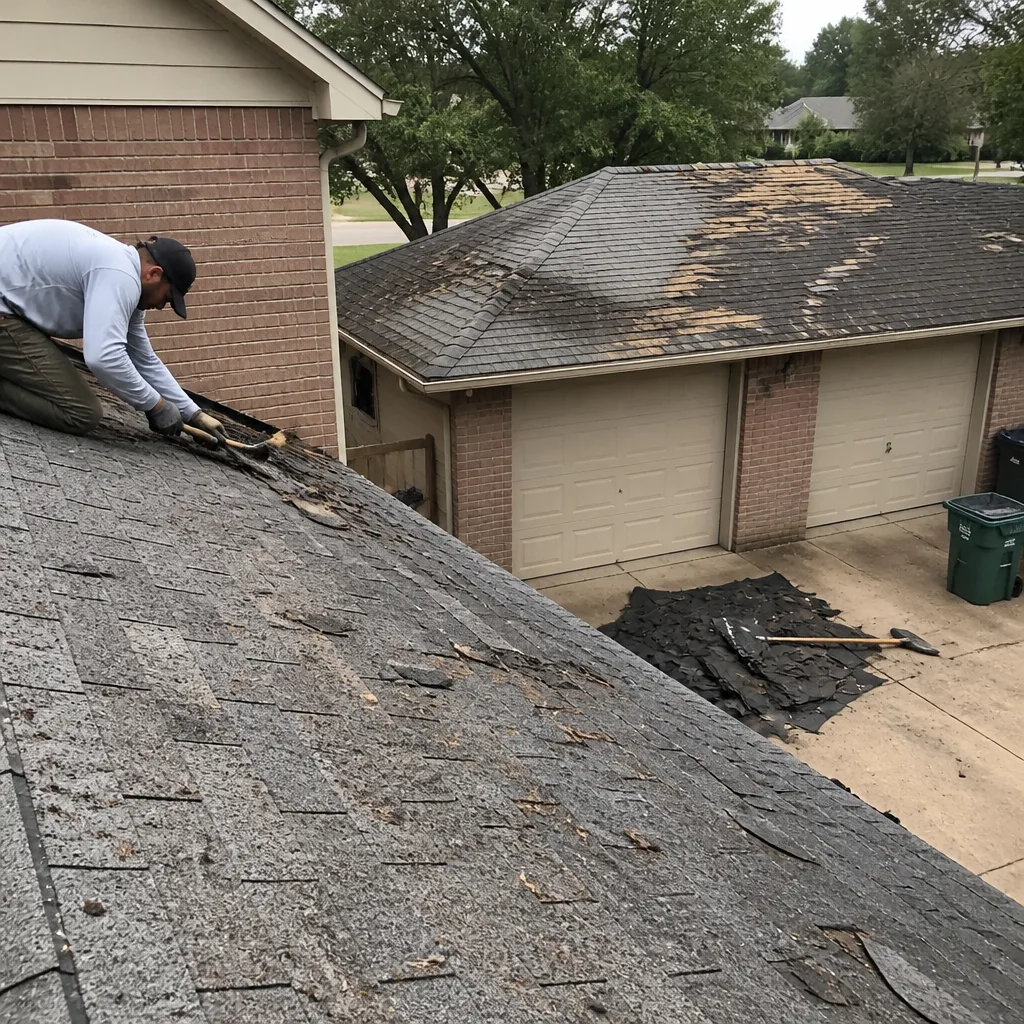 Before
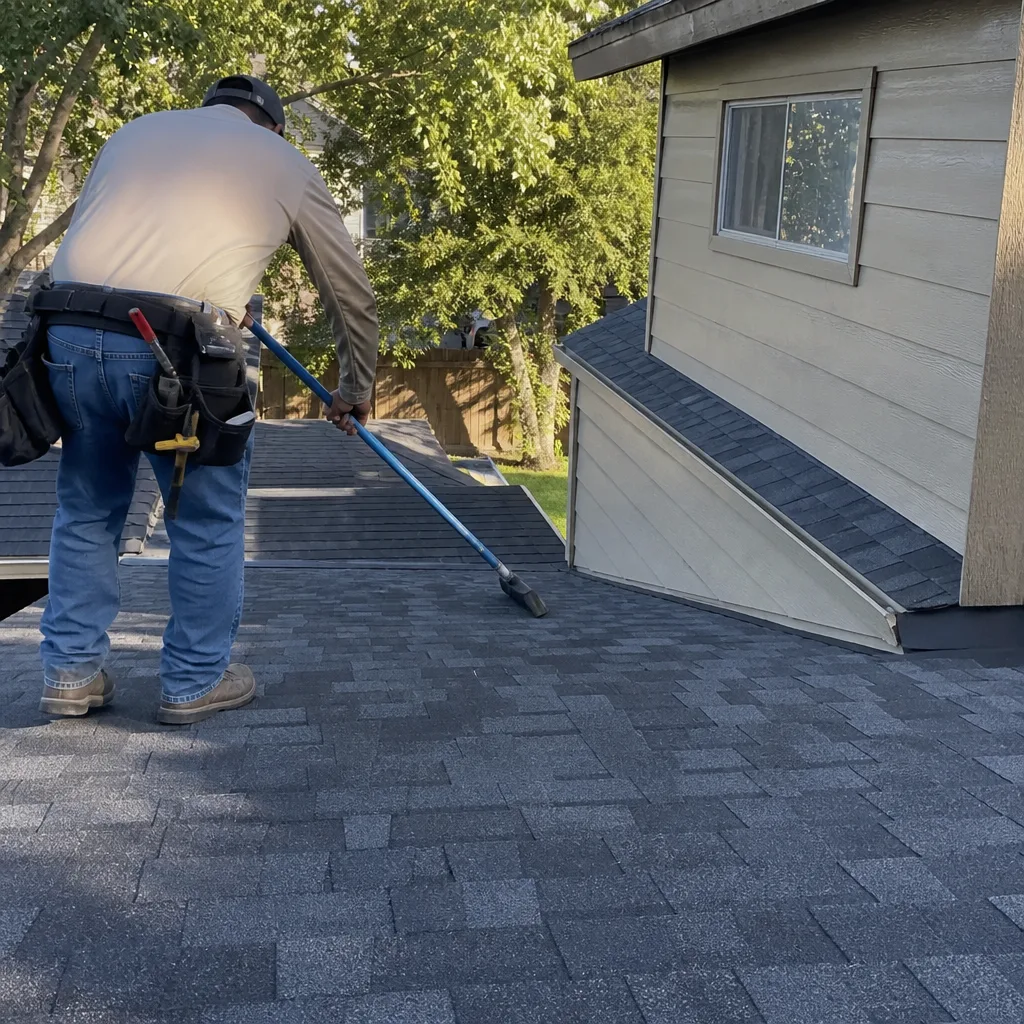 After
After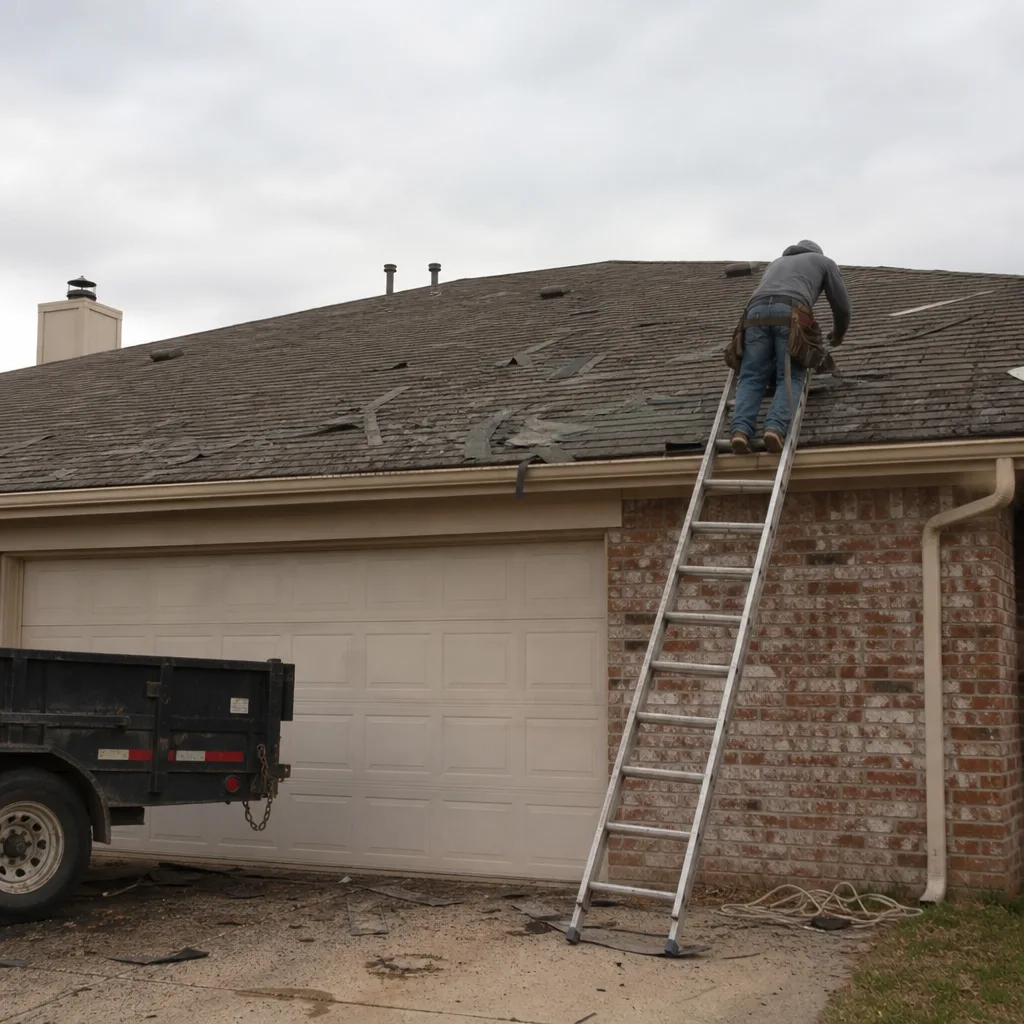 Before
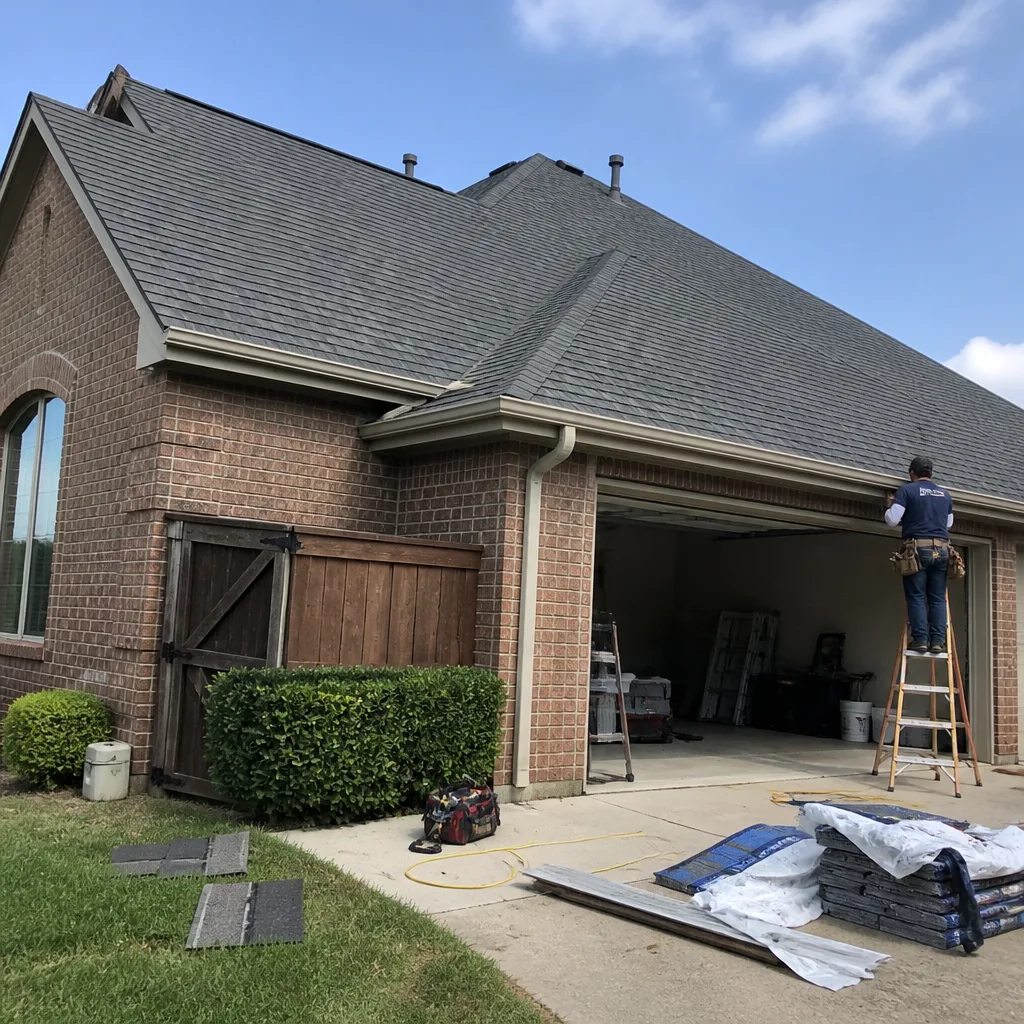 After
After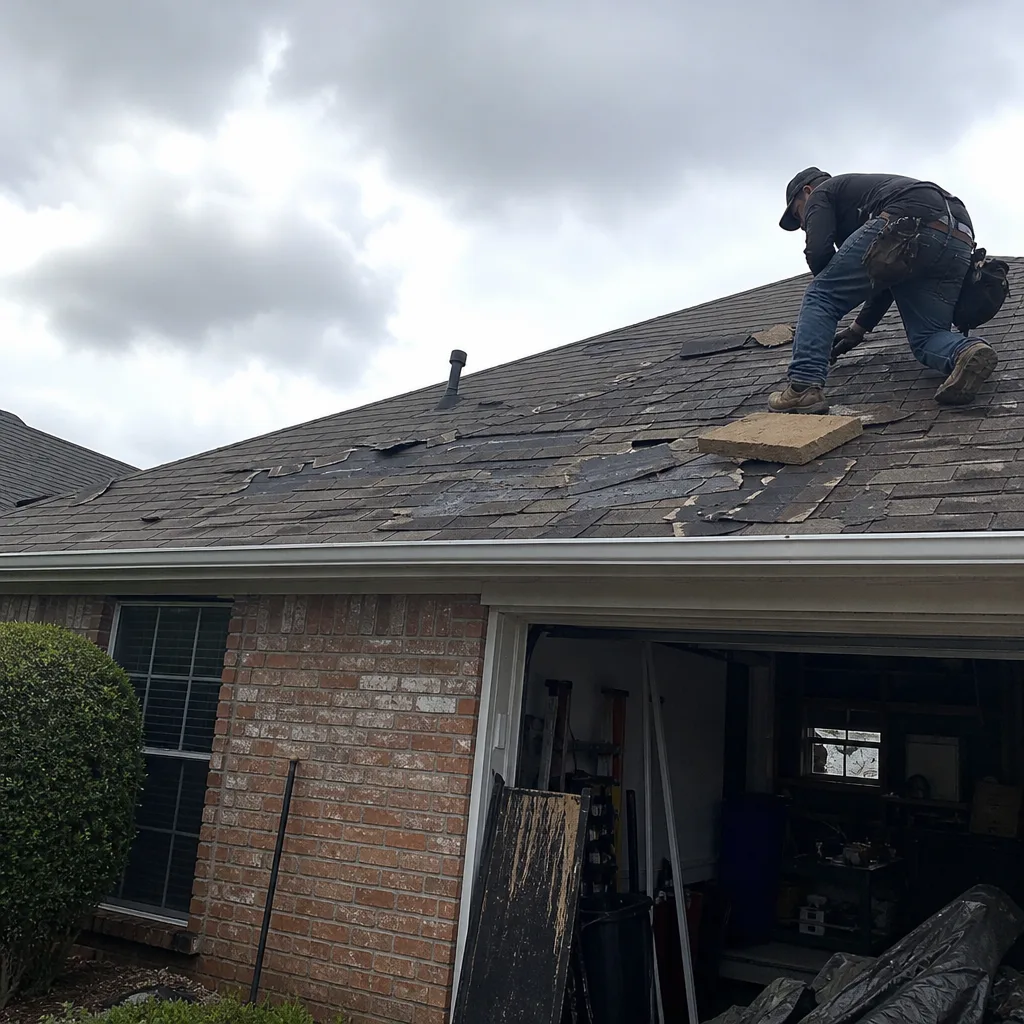 Before
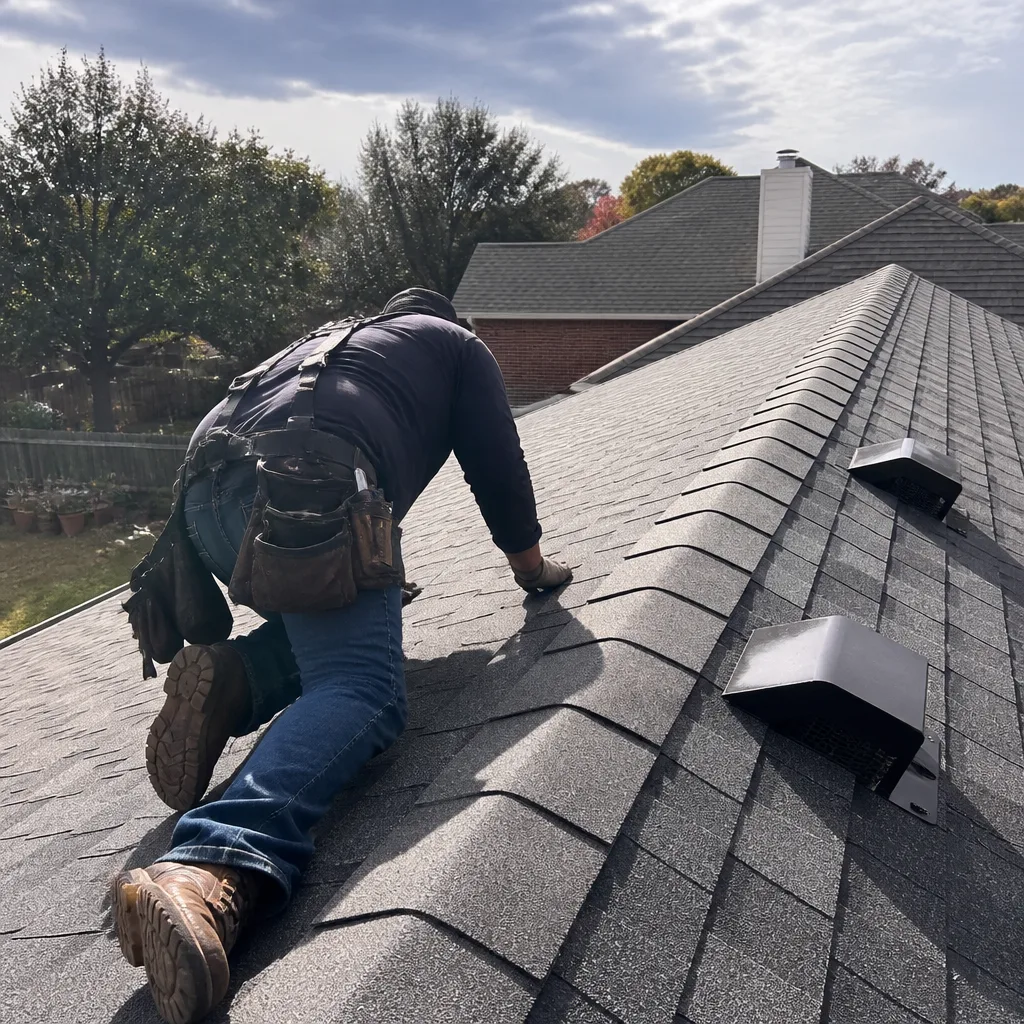 After
AfterReplacement Cost & What’s Included
For a Dallas single-family home with a typical ridge line of 20 to 40 linear feet, a complete CertainTeed ridge vent replacement runs $385 to $675 installed. Shorter ridges or simple replacements fall toward the bottom. Long ridge lines, steep-pitched roofs, or installations where the original roofer cut the slot wrong and we have to recut it to spec push toward the top. That price includes the CertainTeed vent roll, end caps, nails, cap shingles, removal of the old vent, and our written guarantee on the labor for a full year. You’ll get a written price before any work starts, and that price is the price: no change orders, no “we found more once we got up there” phone call. If your Dallas roof is still under an active CertainTeed warranty, we’re happy to match the installation to factory spec so the warranty stays valid.
DIY or Call Us?
A ridge vent replacement is a roof-peak job on a two-story Dallas roofline, and that’s where the honest answer is: this is not a weekend ladder project. You can safely do the diagnostic work yourself from the ground or the attic. Check for staining at the ridge, look for light coming through the vent when you’re in the attic, feel whether the upstairs is ten degrees hotter than the downstairs on a 90-degree afternoon. Those give you facts. The repair itself means working at the highest, steepest point of the roof, often on a 40-degree-plus pitch in the middle of the day. For anyone without full fall-protection gear and a real working knowledge of roof peak venting, the risk of a serious fall is not worth the $300 to $600 saved. That’s not hedging. That’s the same thing we’d tell a neighbor in Oak Cliff or Far North Dallas. Call (432) 302-5605 and we’ll have someone out to look at it and give you the written price.
FAQs
A properly installed CertainTeed ShingleVent II or PeakBooster II vent typically lasts 15 to 20 years in Dallas, which matches the lifespan of the cap shingles covering it. The Texas sun is what kills them: UV exposure breaks down the vent’s edge over time, and the first failure point is almost always the exposed ends at the gable, not the middle of the ridge.
A ridge vent can be repaired when the damage is localized, usually a loose end cap or a short section that has torn free from its nailing line. If the vent is cracked, brittle, or pulling away along more than a third of the ridge, replacement is the honest call, and it’s usually cheaper in the long run than paying for repeated trips up the peak. Call (432) 302-5605 and we’ll tell you which one you’re looking at.
A standard ridge vent replacement on a Dallas home takes half a day to a full day, depending on ridge length, roof pitch, and whether we’re recutting a slot the original installer got wrong. Most jobs are done in one visit, and the attic starts breathing better the same afternoon.
We keep CertainTeed ShingleVent II and PeakBooster II rolls in common lengths on our trucks, along with GAF and Owens Corning equivalents, so most Dallas jobs don’t wait on parts. If your home needs a non-standard size, we can usually have it from our supplier the next morning, which we’ll factor into the written price before any work starts.
Written by Grant Whitlock, Owner, Mercer Roofing Co Dallas at Mercer Roofing Co Dallas, serving Dallas and nearby areas.