
Last updated October 17, 2026
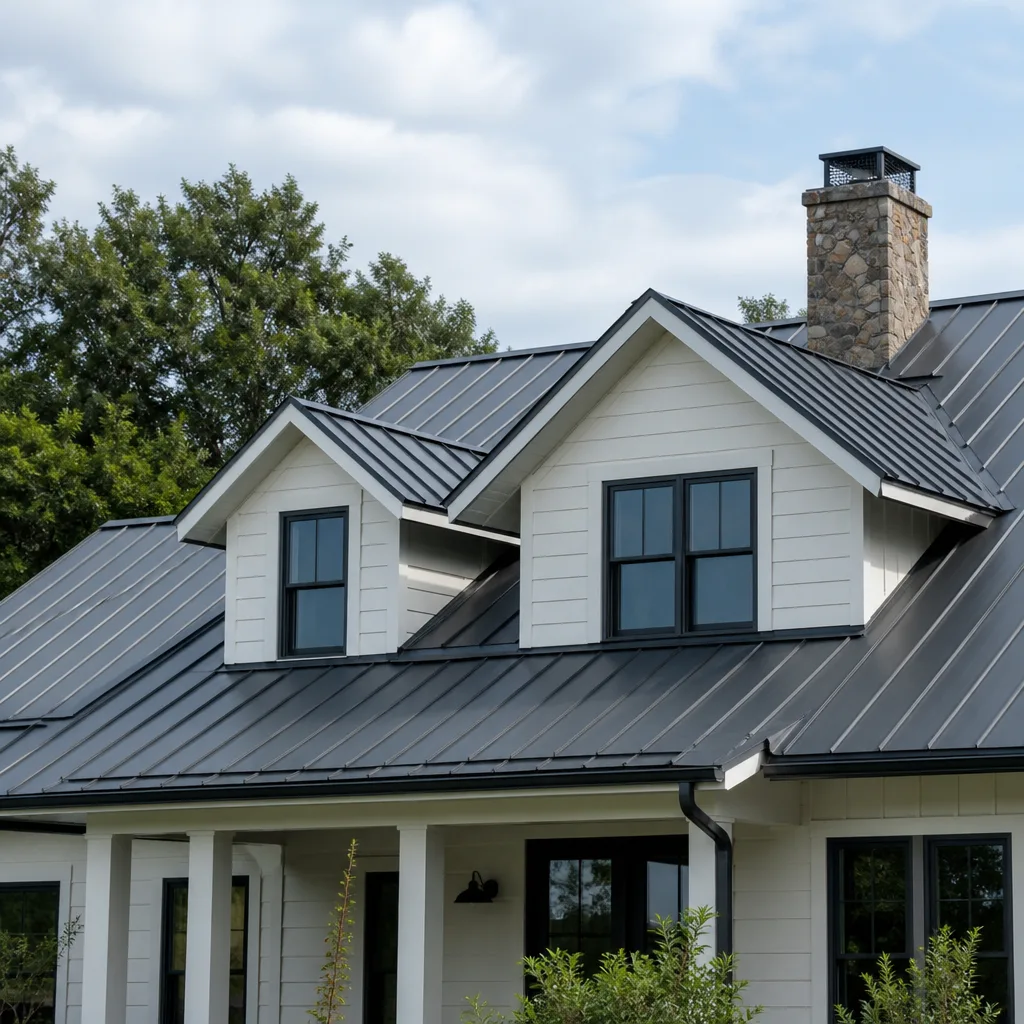 Metal roofing
 Architectural shingles
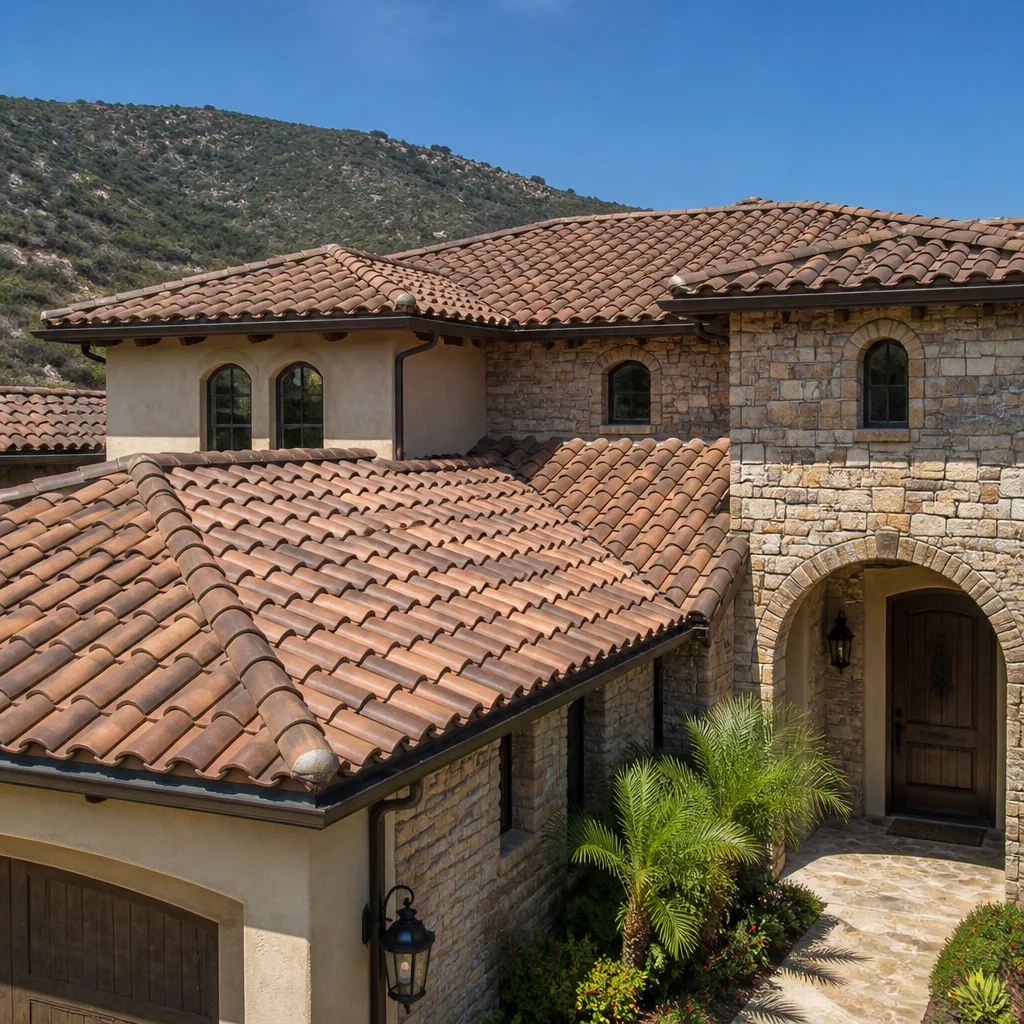 Tile roofing
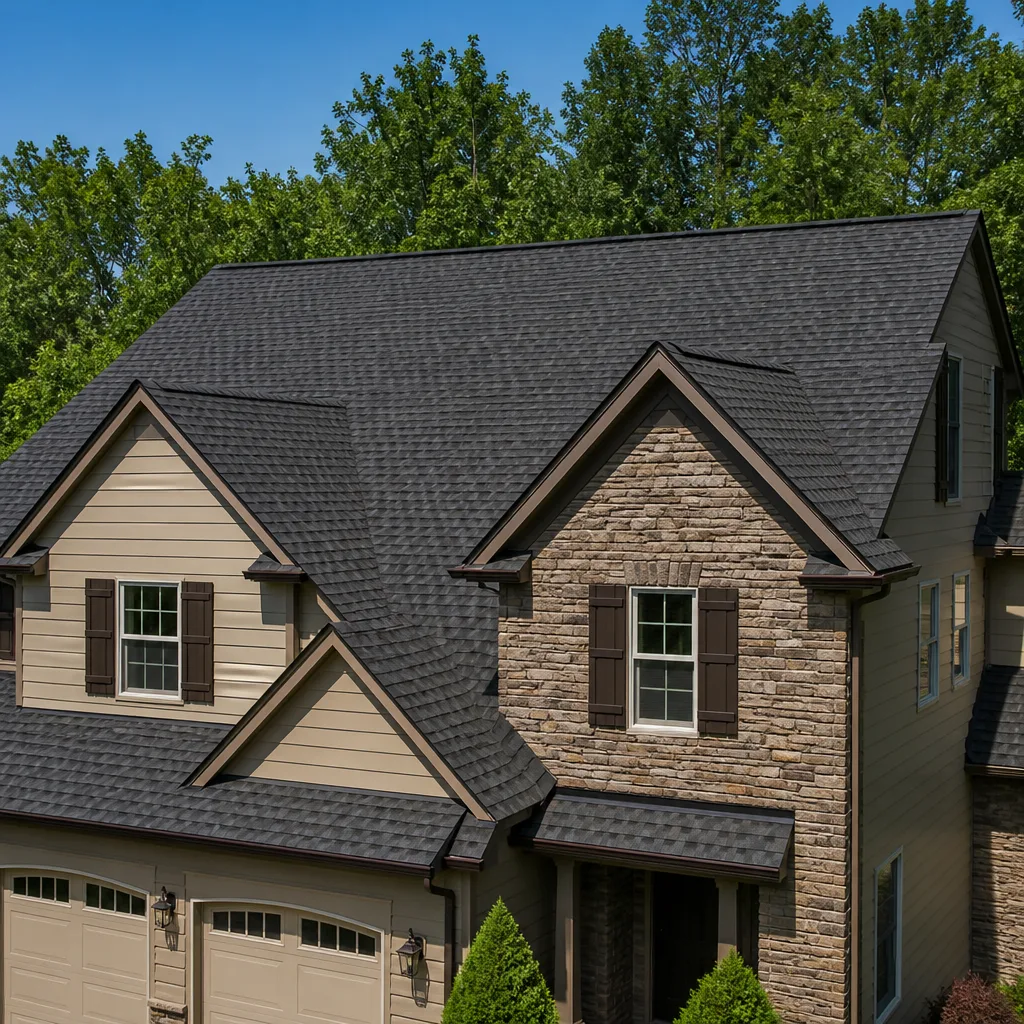 GAF
GAF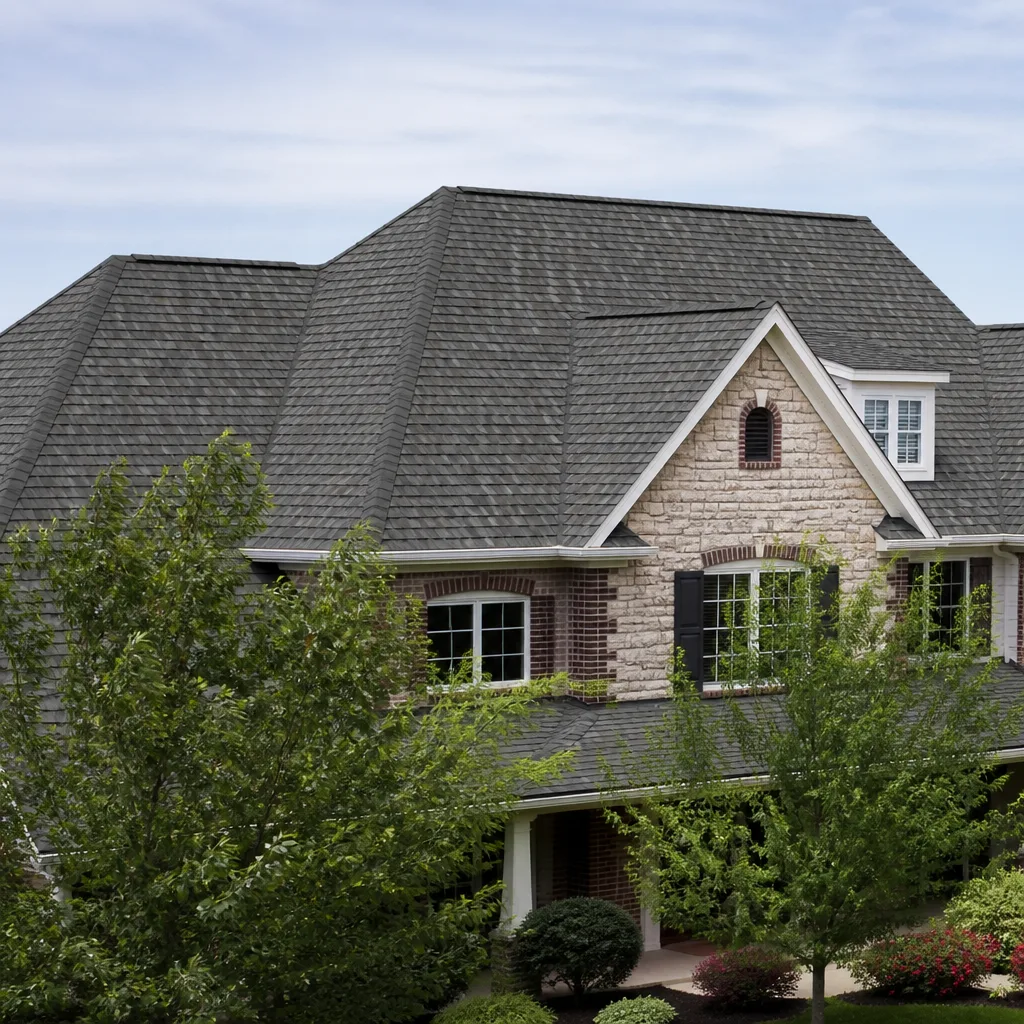 Owens Corning
 Flat & low-slope
Free roof inspection with deck photos before we talk money - GAF and Owens Corning certified installation
Roofing Warning Signs: A Dallas Homeowner’s Reference Guide
The warning sign Dallas homeowners miss most often isn’t on the roof surface at all. It’s an attic that smells musty only after a cold front passes through, signaling a condensation problem that’s been degrading decking for months. By the time you see a ceiling stain, that stain is usually the last chapter of a story that started a year earlier with trapped moisture, a failed vent, or a nail backing out under thermal stress. This guide walks through what actually happens to roofs in Dallas, the order it happens in, and what to look for before a five-figure replacement becomes the only option. For a deeper dive into local conditions, see our Complete Guide to Roofing in Dallas.
Quick Answer
The earliest roof warning signs in Dallas are rarely visible from the ground. You want to check your attic after a temperature swing for musty smells or damp insulation, inspect gutters for excessive granule accumulation after heavy rain, and look for hairline cracks or soft spots in flashing around chimneys, vents, and valleys. The full list below is ordered by how early each sign appears, with what it costs to fix when caught now versus later.
Styles & brands we work with
Table of Contents
- The Attic-First Inspection: What to Check Before You Ever Look at Shingles
- Reading Granule Accumulation in Your Gutters: Normal Shedding vs. UV Degradation
- Dallas Hail Damage: Why Functional Damage Looks Like Nothing From the Curb
- Sagging Decking vs. Truss Settling: How to Tell Them Apart in the Attic
- Flashing Discoloration vs. Active Rust-Through: The Three Highest-Risk Points
- Dallas Code and Climate Factors That Accelerate Roof Aging
- What Roof Repairs Actually Cost in Dallas Right Now
The Attic-First Inspection: What to Check Before You Ever Look at Shingles
The roof is a system, not a surface. And the part of that system that talks first is usually the attic. In Dallas, where summer attic temperatures routinely exceed 140 degrees and winter nights dip into the 20s, the thermal stress on your roof decking and underlayment is constant. That stress shows up in the attic long before a single shingle curls.
Here’s the step-by-step order we use when a Dallas homeowner asks us what to check first. You don’t need special tools. You need a flashlight, about fifteen minutes, and a willingness to go up on a dry day.
- Check the smell first, before you turn on the light. A roof that’s ventilating correctly has a neutral, dry smell, like old wood. A musty, earthy, or sour smell that appears or worsens after a cold front passes signals condensation. Warm attic air meets a suddenly cold roof deck, moisture condenses on the underside of the decking, and that moisture feeds mold and slowly softens the wood. In Dallas, the sharpest condensation events happen in November and March when temperatures swing thirty degrees in a single day.
- Scan the ridge line with the flashlight from inside. Look along the peak where the two roof planes meet. If you see daylight pinholes or thin gaps at the ridge, your ridge vent or ridge cap has shifted. That gap lets heat and moisture exit in the wrong places and lets driven rain enter during the severe thunderstorms we get in April and May.
- Touch the insulation in the top six inches. If it feels damp, crumbly, or clumped rather than fluffy and dry, you have either a roof leak above that spot or a ventilation failure letting condensation collect. Clumped insulation loses about 40% of its R-value, which is why the room below it runs hotter in August and colder in January.
- Look for rust on any exposed nail points poking through the decking. Nails that back out under thermal expansion and contraction leave a tiny hole. The hole itself isn’t the problem at first. The rust stain around it tells you moisture has been present. In Dallas’s humidity swings, that rust appears within six months of the nail backing out. If you see rusted nail tips in more than one area, you’re looking at the early stage of decking moisture damage, not an isolated fluke.
The reason this matters practically: attic signs appear six to eighteen months before the corresponding ceiling stain shows up in your living room. A $500 ventilation correction or a $300 nail reseal in year one beats a $4,800 decking section replacement in year three. This is the same attic-first approach we use when a homeowner in Lake Highlands or Preston Hollow calls with a “we found something weird upstairs” concern before they’ve seen any interior damage.
Reading Granule Accumulation in Your Gutters: Normal Shedding vs. UV Degradation
Every shingle sheds granules. That’s normal, and any Dallas roof over two years old will show some granule deposit in the gutters after a heavy rain. The question isn’t whether granules are there. The question is how many, where they’re collecting, and what they look like up close.
Here’s the diagnostic framework we use. It works because the volume and pattern of granule loss tells you whether you’re looking at routine aging or the early stage of UV failure of the shingle mat.
- Normal seasonal shedding: A thin, even dusting of granules in the gutter trough, usually along the bottom of the downspout side. You can still see the gutter material color through the granules. New shingles shed excess granules during their first year, and every shingle releases a small amount after major hail or wind events. This is normal and requires no action beyond keeping gutters clear.
- Accelerated UV degradation: Granules collect in piles at least a quarter-inch deep at corners where the gutter changes direction. The granules look like coarse black sand. When you pull a handful out and rub them between your fingers, many of them crumble into powder. That crumbling means the ceramic coating on the granule has broken down, which happens when the shingle has been baking under North Texas sun with insufficient attic ventilation below it. The asphalt mat underneath is now exposed to UV rays and heat, and it’s losing flexibility and water resistance.
- Bald spots on shingle edges: If you can see black or gray patches where granules have completely released from the shingle edges, especially on south-facing roof planes, the shingle is roughly halfway through its functional life even if it’s only eight or ten years old. South-facing planes in Dallas absorb significantly more direct UV exposure than the rest of the roof. A roof on a home in Oak Cliff or South Dallas will show south-plane granule loss three to five years before the north side shows any change at all.
The brand matters less than the install conditions. We work with GAF, CertainTeed, Atlas, and other manufacturer-recognized shingle brands, and all of them perform within their rated lifespan when the attic below them is ventilated correctly. The same shingle that fails at year twelve on a poorly vented Dallas roof will still be holding granules at year twenty on a roof with balanced intake and exhaust ventilation. If you’re seeing concentrated granule piles after every rain, the first thing to check is your attic airflow, not your shingle warranty.
Dallas Hail Damage: Why Functional Damage Looks Like Nothing From the Curb
Dallas hail is different from hail in most of the country. The storms that roll through Collin, Dallas, and Tarrant counties in April and May produce dense, wind-driven hail that strikes shingles at an angle. That angular impact does something insurance adjusters know well but most homeowners never hear about: it creates functional damage, which means the mat under the granule layer gets compromised even when the surface looks almost untouched.
A shingle is built in layers. The visible part is the granule surfacing on top. Underneath that sits the asphalt layer, and under that sits the fiberglass mat, which is the structural backbone of the shingle. A hailstone that hits a shingle at 50 miles per hour with a glancing blow can crack or bruise the mat without knocking off enough granules to create a visible dent. From the curb, the roof looks fine. From underneath, in the attic, you’d see a small dark spot where the mat lost its tensile strength.
Here’s what that functional damage actually does over time in a Dallas climate:
- Water intrusion within 12 to 18 months. A compromised mat can’t hold the shingle together under repeated thermal cycling. Dallas goes through about ninety freeze-thaw-reheat cycles each winter even in mild years. Each cycle flexes the compromised area a little more. By the second spring after the hail event, the mat crack opens enough to let water through to the underlayment.
- Zipper failure along the wind line. Wind-driven hail doesn’t strike randomly. It creates a linear pattern of functional damage along the roof plane that faced the storm. That line becomes a zipper: a continuous band where shingles fail in sequence over the following months. A roof that looks fine in June can show a visible line of lifted, cracked, or missing shingles by the following March, all along the same storm-facing plane.
- Settlement value disputes. Insurance adjusters trained outside hail-prone regions often miss functional mat damage because they’re looking for visible granule loss or bruising. A thorough hail inspection includes a chalk test on south- and west-facing planes and a close-up mat examination of suspect areas. In our experience serving homeowners across Dallas, the claims where the homeowner has photos from immediately after the storm and an inspection report from a roofing contractor familiar with Texas hail settle more completely than claims based on curb-level photos alone.
The practical takeaway: if hail hit your Dallas neighborhood, even if it looked like pea-sized stuff, get an attic inspection and a roof-level evaluation. The attic will show mat bruising as dark, soft, or discolored patchy areas on the underside of the decking before the shingles above show anything.
Sagging Decking vs. Truss Settling: How to Tell Them Apart in the Attic
When a homeowner in Dallas sees a slight dip in their roof plane or notices the ceiling below looking uneven, two very different conditions produce that effect. One is sagging decking: the plywood or OSB sheets between the trusses have absorbed moisture and lost their rigidity. The other is truss settling: the engineered wooden frame itself has shifted, usually because a connector plate loosened or a support member was altered during a past renovation. They look similar to the untrained eye and they lead to very different repairs, so getting the identification right matters.
Here’s the difference, explained the way we talk through it with homeowners in neighborhoods like Casa View and Lochwood, where we see both conditions regularly.
Sagging decking presents as a localized dip between two trusses. The trusses themselves are still level and true. If you get into the attic and run your hand along the underside of the decking, you’ll feel a soft, concave area between two parallel truss lines. The wood will feel spongy, and it may have water staining around the edges of the dipped area. In a Dallas attic, sagging decking almost always traces back to one of three sources: a past roof leak that saturated the decking before the shingles were replaced, chronic condensation from poor ventilation, or ice damming during the February 2021 storm that got sealed over without proper drying.
Truss settling presents as a continuous slope change across an entire rafter line. When a truss settles, the dip follows the truss itself, which means you can trace it as a straight line from eave to ridge. From inside the attic, you’ll see the truss member itself sitting lower than its neighbors. Often there’s a gap of an eighth to a quarter inch between the top of the truss and the underside of the decking where the two have separated. The wood will feel solid, not spongy. Truss settling is a structural issue, usually related to a failed connector plate, a cut or notched truss chord from a past HVAC or plumbing retrofit, or long-term foundation movement, which is common in the expansive clay soils that run through East Dallas and the M Streets area.
The consequence of misidentifying these two is real. If decking is sagging and it gets treated as a truss issue, a contractor might recommend structural reinforcement that doesn’t address the moisture damage. If truss settling gets treated as a decking replacement, you’ll spend thousands on new decking that still sits on a shifted frame. The correct diagnosis starts with an attic visit by someone who knows what both conditions feel like, because the tactile difference is the fastest, most reliable test. In our experience, the homeowners who catch decking sag early, before the shingles above start to break and leak, are the ones who avoid full roof deck replacement.
Flashing Discoloration vs. Active Rust-Through: The Three Highest-Risk Points
Flashing is the metal, usually aluminum, galvanized steel, or copper, that seals the joints where the roof meets something vertical: a chimney, a vent pipe, a wall, a valley. Flashing fails before shingles do, and in Dallas, it fails in predictable places. The question homeowners ask us most often is how to tell the difference between cosmetic discoloration, which is normal, and active rust-through, which is a leak waiting to happen.
The three highest-risk flashing points on a Dallas residential roof are:
- Chimney base flashing, especially on the south side. The chimney flashing takes direct UV exposure on its south face plus the runoff of every rainfall. Dallas rain is slightly acidic, more so after summer ozone events, and that acid slowly eats at the galvanized coating. Discoloration that looks like a dull gray film with no flaking is normal oxidation and doesn’t need replacing. Active rust-through looks like dark brown streaks, pitting, or actual pinholes you can see when you hold a flashlight at an angle. In the chimney area, also check the mortar joints. Cracks wider than a dime in the crown or step flashing gaps let water ride down inside the chimney chase, which shows up as a slow stain on the ceiling near the fireplace, often months after the rain that caused it.
- Pipe boot flashing around plumbing vents. These rubber-and-metal assemblies seal the vent pipe where it pokes through the roof. The rubber collar degrades under UV and in Dallas heat, it typically cracks and splits around year eight or nine. The split is usually on the side facing the sun. A split boot doesn’t look dramatic from the ground; you need to be on the roof or use binoculars to see hairline cracks in the rubber. But the leak it allows is consistent and slow, soaking the insulation and decking around the pipe until the ceiling below shows a brown ring. This is one of the most common small leaks we repair in homes across Dallas, and it’s a $200 to $400 fix when caught before the decking rots, versus $1,500 to $3,000 when it’s been leaking for two seasons.
- Valley flashing in open valleys. Dallas homes with cut-up rooflines often have open metal valleys where two roof planes meet. The valley concentrates the runoff of two entire roof sections into one channel, and over time, the metal wears thin at the point where the water changes direction. Active failure looks like rust bleed staining the shingles below the valley, or a visible seam separation where two sections of valley metal meet. If you see rust staining running down the shingles from the valley, the valley metal has rusted through and water is running underneath it, not over it.
The reason we emphasize these three points is that flashing failures are the quiet ones. Shingle damage announces itself in a storm. Flashing rusts in silence, a little more each summer, and the first sign is often the soft spot in the drywall, not anything visible from the street. A yearly look at your chimney base, your vent boots, and your valley channels takes fifteen minutes and catches the majority of what goes wrong on Dallas roofs before it goes wrong inside the house.
Dallas Code and Climate Factors That Accelerate Roof Aging
Every city’s building code reflects its climate. Dallas code requires specific nailing patterns, underlayment types, and ventilation ratios because the local weather punishes roofs in specific, predictable ways. Understanding three of those local factors helps you read your own roof more accurately.
First, the heat and UV load. Dallas averages about 232 sunny days a year, and summer afternoons routinely push attic temperatures past 140 degrees. That heat accelerates asphalt shingle aging by a rate roughly 50% higher than the same shingle installed in a cooler climate. A 30-year architectural shingle in Dallas that’s poorly ventilated may function more like an 18-year shingle. The accelerator is insufficient attic ventilation, which is why our attic inspections always include measuring the intake and exhaust balance, not just the shingle condition. The fix is often under $800 in ventilation improvements, and it’s the single highest-value maintenance move for Dallas roofs.
Second, the wind. Dallas sits on the edge of the severe thunderstorm belt, and straight-line wind events of 50 to 70 miles per hour happen every spring. The code requirement for six nails per shingle in high-wind zones exists because four-nail installation fails in these storms. When we inspect roofs after a wind event in Dallas neighborhoods like Lakewood or North Dallas, the damage pattern we see most is shingles that were nailed with four nails and lifted loose at the corners. If your roof was installed before 2012 or was done by a low-bid crew, checking the nailing pattern on a lifted shingle edge is worth doing.
Third, the clay soil. This one surprises people, but it matters. Dallas sits on expansive clay that swells in wet seasons and contracts during summer drought. Foundation movement of even half an inch creates stress at the roof-wall connection, particularly on single-story ranch homes built in the 1960s and 1970s. That stress can open hairline gaps in the flashing where the roof meets the exterior wall, letting water in during a summer thunderstorm. If you see a vertical crack in the brick or siding that runs from the foundation up toward the roofline, and you also see a ceiling stain near the same wall, the two may be connected. The fix is usually a flashing repair at the roofline plus a foundation assessment, not a full roof replacement.
No code factor here is exotic. The point is that Dallas roofs age according to a local clock, and reading that clock correctly tells you when to inspect, when to repair, and when a roof has simply reached the end of the road.
What Roof Repairs Actually Cost in Dallas Right Now
Knowing what a repair should cost before you call anyone gives you a filter for the bids you’ll receive. Dallas repair pricing varies by the material, the roof pitch, and the access difficulty, but the ranges below reflect what we see across the city in a typical year. All prices assume a standard single-family home with a walkable roof pitch.
| Repair Type | Typical Range in Dallas | What Affects the Price |
|---|---|---|
| Pipe boot or flashing replacement (single vent) | $200 – $400 | Roof pitch, vent count, decking condition around the pipe |
| Small shingle patch (under 100 sq ft) | $350 – $700 | Shingle brand, matching availability, roof pitch |
| Chimney flashing replacement with sealant | $600 – $1,200 | Chimney height, masonry condition, counterflashing requirements |
| Valley flashing replacement | $500 – $1,000 per valley | Valley length, metal type, whether underlayment below needs replacing |
| Decking section replacement (per 4×8 sheet) | $75 – $150 per sheet | Usually done alongside shingle replacement in the same area |
| Attic ventilation correction (ridge or soffit vents) | $400 – $900 | Number of vents, linear footage of ridge vent, access |
| Full roof inspection (attic + roof surface) | Free with Mercer | Included with any repair estimate; covers attic, decking, flashing, shingles |
One note on pricing in Dallas: we write the price down before any work starts. Every time. No exceptions. That’s a company standard, and it’s in the quote you’ll get. The number on the quote is the number on the invoice. If we find decking damage under the shingles once the repair is underway, we show you the damage in the attic and give you a separate written price for the decking before touching it. You never pay for something you didn’t approve in writing first.
Locally, we’ve done Roof Repair in Dallas work across the city for twenty-four years, and the cost ranges above run consistent from North Dallas down through Oak Cliff. The one variable worth watching is the shingle brand on your roof. Atlas, Tamko, GAF, and other major brands all have good distribution in the Dallas market, and matching a decade-old shingle color is easier than it was ten years ago, but some discontinued colors require full replacement of the affected plane. That’s a conversation we have with the homeowner before writing anything down.
Common Mistakes to Avoid
- Waiting for a ceiling stain to investigate. A stain means water has already saturated the decking, insulation, and drywall. In Dallas, that can take eight to twelve months of slow seepage. The attic would have shown the problem far earlier.
- Assuming granule loss always means hail damage. In Dallas, the more common cause of premature granule loss is UV degradation from poor attic ventilation. Filing a hail claim when the real issue is ventilation gets your claim denied and leaves the underlying problem unfixed.
- Replacing shingles without addressing the ventilation issue underneath. A new GAF or CertainTeed shingle installed over a poorly ventilated attic will fail early the same way the old one did. The shingle wasn’t the root cause.
- Treating every rust line on flashing as failure. A dull gray patina is normal galvanized steel aging. Replacement is warranted when you have pitting, pinholes, or rust bleed onto the shingles below. Replacing good flashing is wasted money.
- Climbing onto a roof alone after a storm to inspect for damage. Wet shingles are slick, and wind-damaged decking can give way. If you’re not comfortable on a ladder or the pitch is steep, have a professional do the roof-level inspection. The attic portion is safe and tells you most of what you need to know anyway.
- Paying a deposit before seeing a written quote. In Dallas, reputable roofing companies provide a written price before any work starts and don’t ask for a deposit on a simple repair. If a contractor wants money before giving you a written scope, that’s a red flag.
See the difference
 Before
 After
After Before
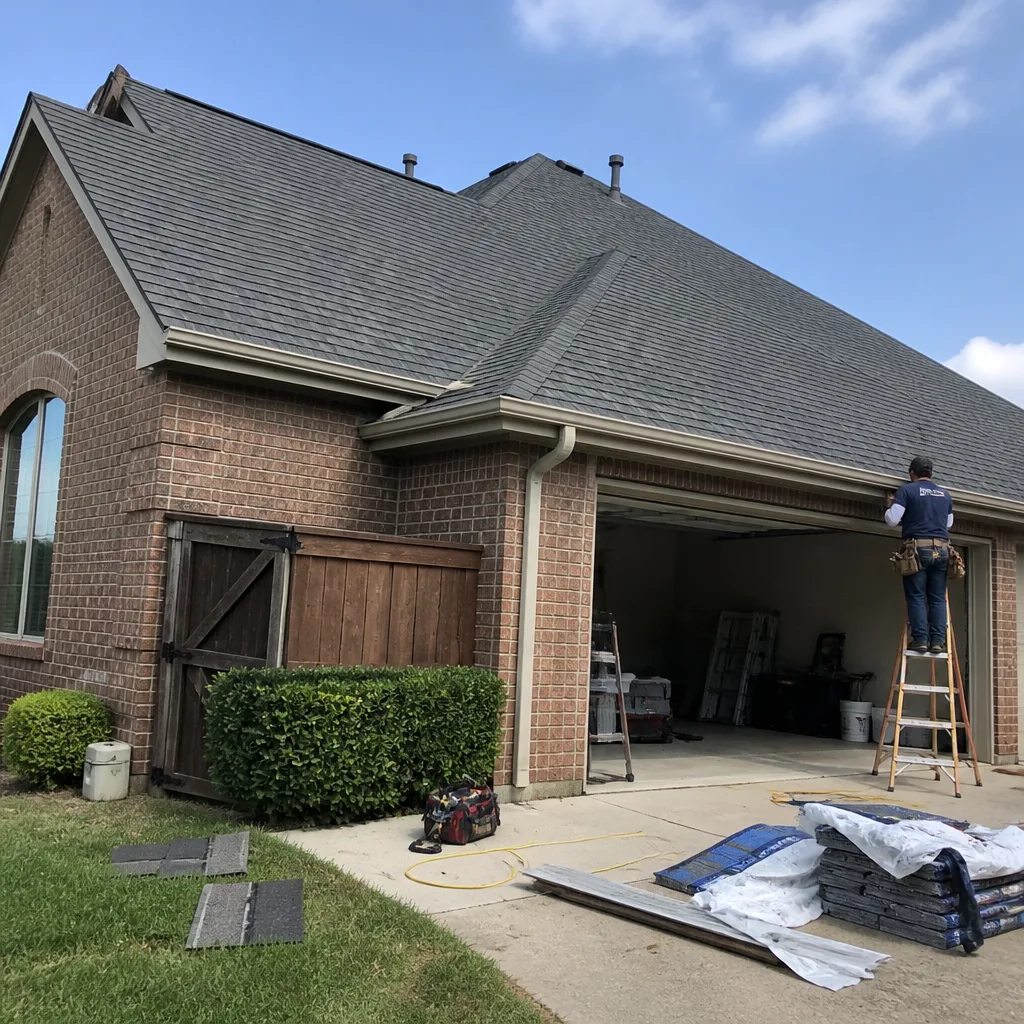 After
After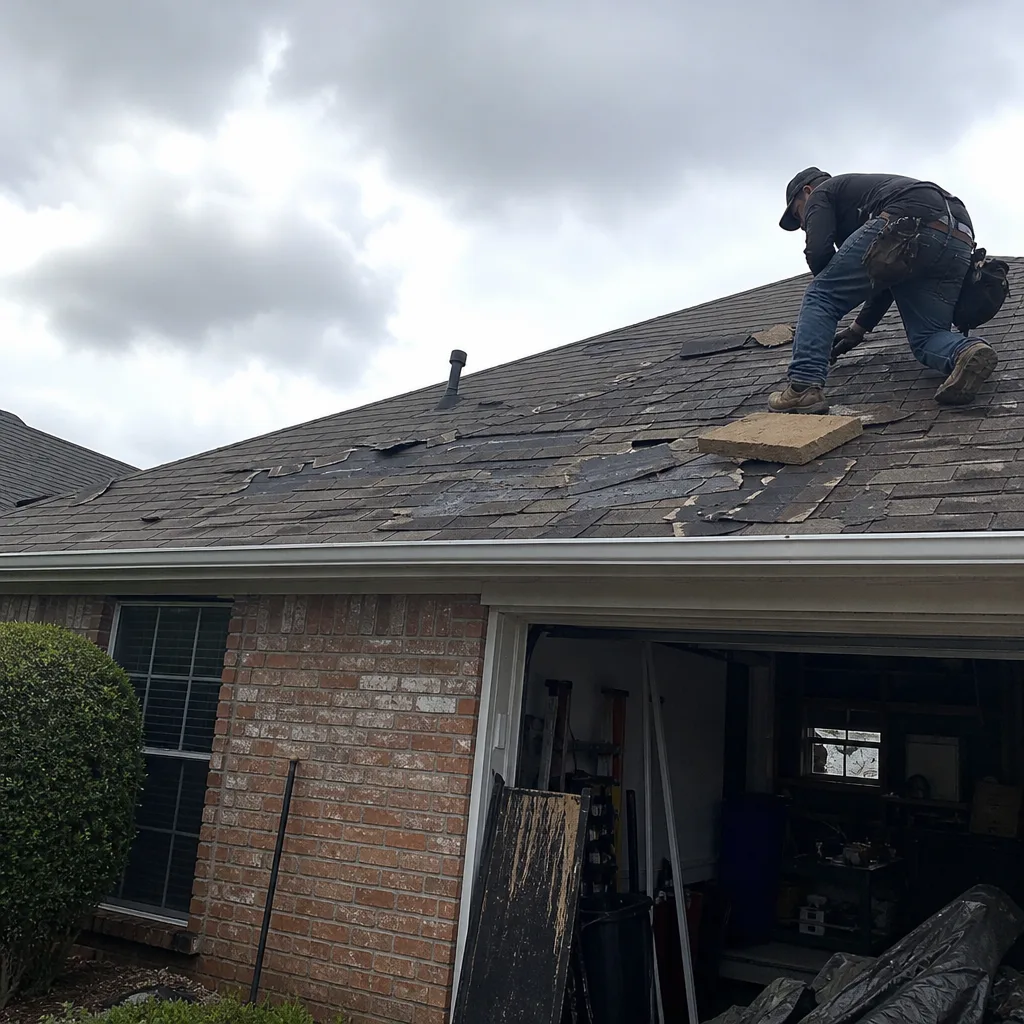 Before
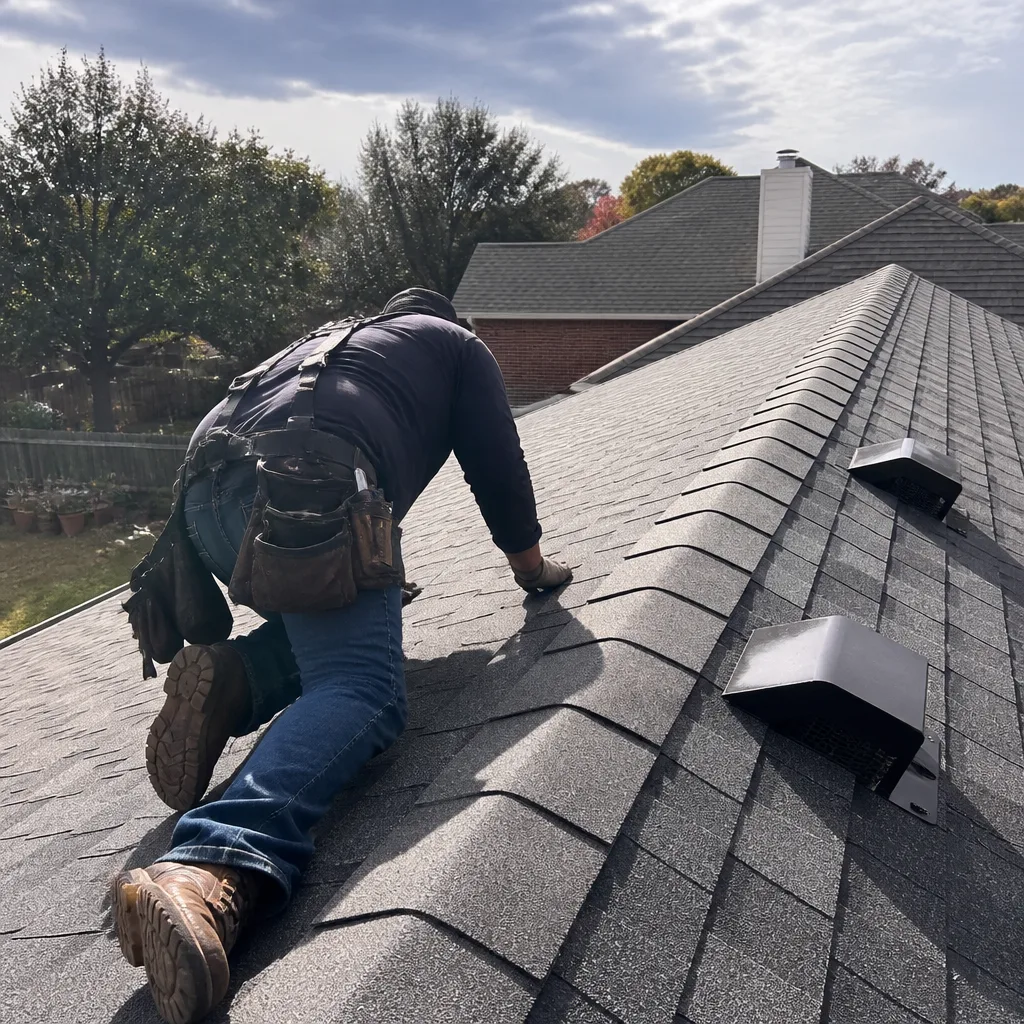 After
AfterWhen to Call a Professional
Some warning signs are informative. Others mean the problem is past the point of a homeowner fix. Call a roofing professional when you see daylight through the roof decking from inside the attic, when the decking feels soft or spongy to the touch, when you see active rust-through on flashing at the chimney or valley, or when a hail event has passed over your neighborhood regardless of whether you see visible damage. Those conditions each mean the roof system is already compromised, and the cost of delay compounds monthly. Mercer Roofing Co Dallas offers free estimates across Dallas and the surrounding area. For more guides & resources on protecting your roof, visit our blog. The estimate includes the attic inspection, the roof surface inspection, and a written price before any work starts. Call (432) 302-5605 to schedule yours.
Frequently Asked Questions
Twice a year is the right cadence for most Dallas homes: once in October before the winter cold fronts arrive, and once in April after the spring hail season winds down. Our Seasonal Roofing Care for Dallas: Year-Round Homeowner’s Guide breaks down exactly what to check in each season. The October inspection catches ventilation and condensation issues before they cause attic moisture problems all winter. The April inspection catches hail damage while the mat bruising is still fresh and easier to document. Between those two, keep an eye on the attic after major storms or sharp temperature swings.
Visible hail damage includes circular dents or divots in the shingle surface, granule loss in a circular pattern, and cracks that radiate from an impact point. But the more dangerous type is functional damage: mat bruising beneath the shingle surface that looks like nothing from the ground and can’t always be seen without close inspection from the roof or attic. After any significant Dallas hail event, have the roof inspected even if the curb view looks fine.
Yes, and the attic is actually the best place to start. The steps in the attic-first section of this guide are designed for a homeowner with a flashlight and fifteen minutes. The roof surface itself is a different story. If your roof pitch is steep or the shingles are wet, leave the surface inspection to someone with the right equipment and experience. Not sure whether to DIY or call a pro? Our DIY vs Professional Roofing: The Dallas Homeowner’s Decision Guide walks through how to decide. High-pitch roofs and wet shingles are genuinely dangerous, and the attic tells you most of what you need to know anyway.
An architectural asphalt shingle roof in Dallas, properly ventilated and installed to six-nail standard, lasts roughly twenty to twenty-five years. The same shingle on a poorly ventilated roof lasts closer to fourteen to eighteen. The single biggest longevity variable in the Dallas climate is attic ventilation, not the shingle brand you choose. We install and repair with manufacturer-recognized lines from Atlas, Tamko, GAF, and others, and the performance difference between them narrows considerably when ventilation is correct.
Flashing failure around pipe boots and chimneys. Dallas heat degrades the rubber collar on pipe boots faster than most homeowners expect, and the split usually appears around year eight or nine on the sun-facing side. The resulting leak is slow and silent until the ceiling below shows a stain. A yearly check of the vent boots and chimney base catches this early, and the fix is usually under $500 when caught before decking damage occurs.
It depends on the cause. Hail and wind damage are typically covered under Texas homeowners policies, though functional mat damage requires a roof inspection report that documents the bruising. Slow leaks from flashing failure or general aging are usually considered maintenance issues and are not covered. The best move after any hail event is a documented inspection from a Dallas roofing contractor before you file the claim. Call Mercer Roofing Co Dallas at (432) 302-5605 for a free post-storm inspection. The estimate is free, and we’ll walk you through what the report shows.
The Bottom Line
Roof problems in Dallas don’t start where you can see them. They start in the attic, in the flashing, and in the shingle mat, and they quietly become expensive while the roof still looks fine from the street. The homeowners who avoid the biggest bills are the ones who check the attic seasonally, read the granule patterns in their gutters, get a roof-level inspection after every hail event, and act on flashing rust while it’s cosmetic. If any section of this guide described something you’ve noticed at your own home, start with a phone call. Mercer Roofing Co Dallas home inspections are free, the price is in writing before any work starts, and every repair carries a written 365-day guarantee. Call (432) 302-5605 to schedule yours.
Written by Grant Whitlock, Owner at Mercer Roofing Co Dallas, serving Dallas since 2000.